Why Choose Photochromic Sunglasses for Your Business?
Photochromic Sunglasses offer businesses a practical way to serve customers moving between changing light conditions. Their lenses darken in response to ultraviolet light and become clearer when exposure falls. That can make them useful for shoppers who walk outdoors, commute, or spend time moving between shaded streets and open spaces. One product, several everyday settings. The appeal is easy to see.
For retailers and eyewear brands, the opportunity is more than a feature on a product card. A clear explanation of lens behavior can help customers choose with realistic expectations. Performance varies by lens design, temperature, and how much ultraviolet light reaches the lens. Some lenses may not darken as much inside a vehicle, for example. That detail matters at the point of sale. Businesses should review supplier specifications, inspect samples in real conditions, and check the quality of frames, coatings, and hinges before placing large orders. Ask about testing, warranty coverage, and product labeling, too. A supplier’s polished photos are not enough.
There is a trade-off. Photochromic lenses may not suit every customer or every use, and they do not replace good product guidance. Staff need simple answers about care, transition time, and expected performance. A short demonstration near a bright window can make the change visible, though it cannot predict every customer’s experience. The best business case comes from matching the product to a genuine need, not promising a perfect solution. Start with a small range, collect customer feedback, and adjust your offer. That takes patience. It can also build trust.
What Photochromic Sunglasses Are and How They Work
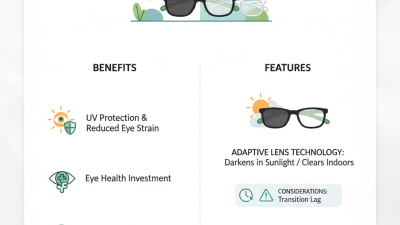
Photochromic sunglasses contain light-sensitive compounds within or on the lens. When ultraviolet light reaches them, these compounds change structure and absorb more visible light. The lens then darkens. That change is reversible. As UV exposure falls, the compounds return toward their original state, and the lens becomes clearer.
The transition is gradual, not an instant switch. A customer walking from a bright pavement into a shop may notice the lenses stay tinted briefly. Temperature and the amount of UV exposure can also affect how dark they become and how quickly they fade. In warm weather, some lenses darken less than they do in cool conditions. Car windshields block much UV light, so ordinary photochromic lenses may not darken much inside a vehicle. Some lens designs also respond to visible light, but performance varies.
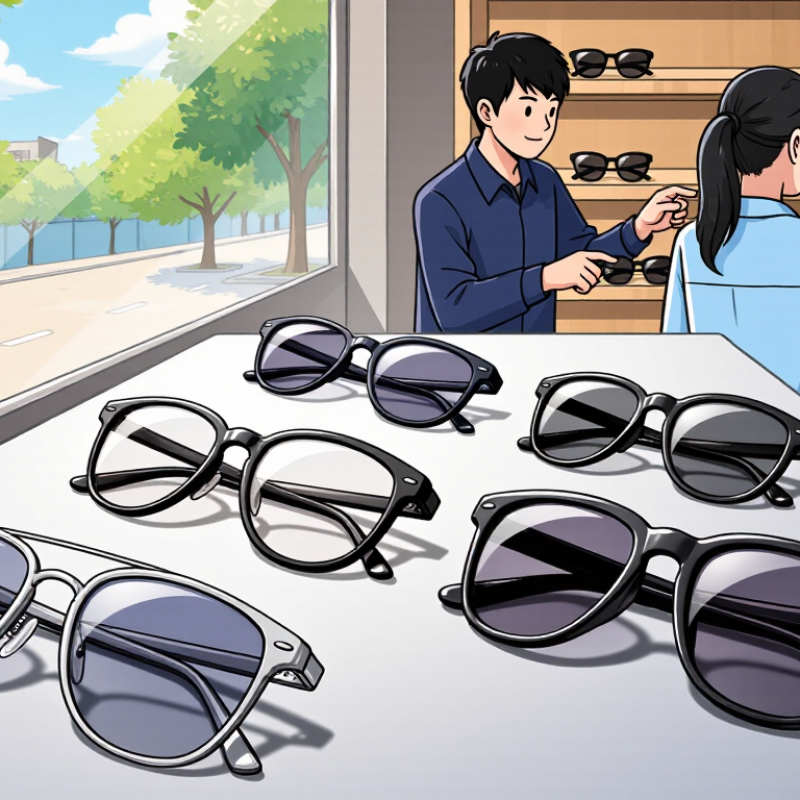
For a business, explaining these limits is part of recommending the right product. Ask where customers expect to wear the glasses: on outdoor walks, during commutes, or between indoor and outdoor spaces. A simple demonstration near a sunny window can show the transition, though it may not predict every real-world result. I would not describe one pair as ideal for every setting. People who need a consistently dark tint may prefer dedicated sunglasses.
Key Benefits for Businesses and Their Customers
Photochromic sunglasses offer businesses a practical way to serve customers moving between indoor and outdoor settings. The lenses darken in response to light, reducing the need to switch pairs during a commute, outdoor shift, or weekend trip. For retailers and optical practices, this creates a clear product benefit to explain at the counter. The customer can see the change happen. That helps.
Eye protection also has a public-health dimension. The World Health Organization’s guidance on ultraviolet radiation links long-term UV exposure with eye damage, including cataracts. WHO materials estimate that UV exposure may contribute to up to 10% of cataract-related blindness. The WHO and World Meteorological Organization’s Global Solar UV Index guide recommends protective measures when the index reaches 3 or higher. Businesses can use these findings to explain why UV protection matters, while checking that each lens specification independently confirms UVA and UVB coverage.
There is a catch. Photochromic lenses do not always darken equally in every environment; many car windshields filter UV light, which can limit the change. Some lens designs respond to visible light as well, but performance varies. Staff should explain this before purchase, not after a customer notices it on a sunny drive. Clear guidance builds trust. It also helps businesses match lens features to real routines, rather than promising one solution for everyone.
Why Choose Photochromic Sunglasses for Your Business? - Key Benefits for Businesses and Their Customers
| Dimension |
What Is True About Photochromic Lenses |
Potential Customer Benefit |
Business Relevance |
| Changing light conditions |
Many photochromic lenses darken when exposed to ultraviolet (UV) light and become lighter again when UV exposure decreases. The degree and speed of change vary by lens design and conditions. |
One pair can adapt across some indoor and outdoor settings, reducing the need to switch between clear glasses and sunglasses. |
Offers a clear product-use story for customers seeking adaptable eyewear; avoid promising instant or complete transitions. |
| UV protection |
UV protection depends on the specific lens product. A lens becoming darker does not, by itself, establish its UV protection level. |
Customers can choose lenses that combine photochromic tinting with verified UV protection, when the product is rated for it. |
Use the product's documented specifications and applicable labeling when describing UV protection. |
| Driving use |
Vehicle windshields block much of the UV light that activates many conventional photochromic lenses, so those lenses may not darken as much in a car. Some designs also respond to visible light. |
A suitable driving-oriented lens may offer a more useful tint response behind the windshield, depending on its design. |
Ask about the customer's driving needs and explain that performance behind a windshield varies by lens technology. |
| Temperature effects |
Temperature can affect photochromic performance. Many conventional lenses become darker in colder conditions and may remain lighter in warmer conditions under similar UV exposure. |
Customers can set realistic expectations about how tint may differ across seasons and climates. |
Provide product-specific guidance rather than assuming the same tint level in every environment. |
| Product selection |
Available options can differ in lens material, color, prescription compatibility, activation behavior, and intended use. |
Customers can compare options based on daily routines, preferred appearance, and vision needs. |
A needs-based assortment can help staff explain meaningful differences without relying on broad performance claims. |
| Retail and service experience |
The visible change in tint makes the lens function easy to demonstrate, while actual results depend on the product and exposure conditions. |
A demonstration can help customers understand how the lenses are intended to work before choosing a pair. |
Staff training and clear explanations can support informed decisions and help prevent misunderstandings about indoor clarity or driving performance. |
Note: Lens behavior varies by product, UV exposure, temperature, and surroundings. Check the manufacturer's specifications for product-specific claims.
Industries and Markets That Can Benefit
Photochromic sunglasses can suit businesses whose customers move between bright outdoor spaces and shaded interiors. Outdoor retailers, cycling shops, running stores, and sports clubs can offer them to people who want one pair for changing light. A runner may leave a shaded trail and cross an open, sunlit path within minutes. That matters.
Travel companies, resorts, and outdoor attractions can also consider them for guests moving between patios, beaches, and indoor areas. Gift shops near parks or coastal destinations may find the feature easy to explain: lenses darken in response to ultraviolet light and become clearer as exposure decreases. The change is not always immediate. Temperature, lens design, and the amount of UV exposure can affect performance, so staff should set realistic expectations.
Delivery services and outdoor event teams are another potential market, especially for workers who spend much of the day outside. However, photochromic sunglasses are not a substitute for task-specific protective eyewear. They may also darken less behind some vehicle windshields, since glass can filter UV rays. That limitation is worth testing before a business commits to a large order. For any seller, customer fit, frame comfort, lens options, and clear care instructions matter as much as the photochromic feature itself.
Factors to Consider When Choosing a Supplier
When choosing a supplier for photochromic sunglasses, look beyond the quoted unit price. Ask for lens samples and test them outdoors, in a car, and under changing light. Some photochromic lenses respond differently behind a windscreen, and temperature can affect how dark they become. Small details matter.
Request clear specifications for UV protection, lens materials, coatings, and available frame options. A reliable supplier should explain how products are tested and provide relevant documentation, rather than relying on broad claims. Check whether tint changes consistently across samples. Ask for proof. Also confirm minimum order quantities, production capacity, lead times, and how defects are handled. These details affect inventory planning as much as lens performance.
Communication is part of quality, too. Note how quickly the supplier answers technical questions and whether they flag limitations honestly. A sample may look excellent in mild weather but behave differently in hotter or colder markets; no trial covers every condition. Discuss your customers, sales channels, and expected order volume before agreeing on specifications. Clear records and realistic timelines make future reorders easier.
Why Choose Photochromic Sunglasses for Your Business?
Supplier selection starts with verifying lens performance across lighting conditions.
Filter-category visible light transmittance (VLT) ranges are based on ISO 12312-1. Ask suppliers to provide measured VLT for both the light and dark states of photochromic lenses, and verify UV protection separately. Category 4 lenses are not suitable for driving.