7 Tips for Buying Photochromic Sunglasses
Buying Photochromic Sunglasses can seem simple until changing light exposes their weaknesses. A pair may look clear indoors, then darken beside a bright window or on a mountain trail. The experience depends on lens technology, UV exposure, temperature, fit, and driving conditions. Small details matter.
Optometrist and optical expert Dr. Gary Heiting, OD, explains, “Photochromic lenses are eyeglass lenses that darken automatically when exposed to sunlight.” That convenience is real, but it is not universal. Most lenses react strongly outdoors because ultraviolet light activates them. Many windshields block much of that UV light. The lenses may therefore remain lighter inside a car. Cold weather can also slow the fading process. Warm conditions may produce faster changes, but product performance still varies.
This guide presents seven practical tips for choosing Photochromic Sunglasses with greater confidence. It examines lens darkness, activation speed, UV protection, polarization, prescription compatibility, frame fit, and warranty support. A darker lens is not automatically a better lens. Nor does a famous brand guarantee perfect results for every face or climate. I have learned that shoppers often focus on style first, then regret ignoring nose fit or side glare. That mistake is easy to repeat.
Expect trade-offs. Some claims sound impressive. Test them carefully. Check independent specifications, ask an optician direct questions, and consider your daily route. Your best pair should feel comfortable at noon, remain useful indoors, and perform predictably when the weather changes.
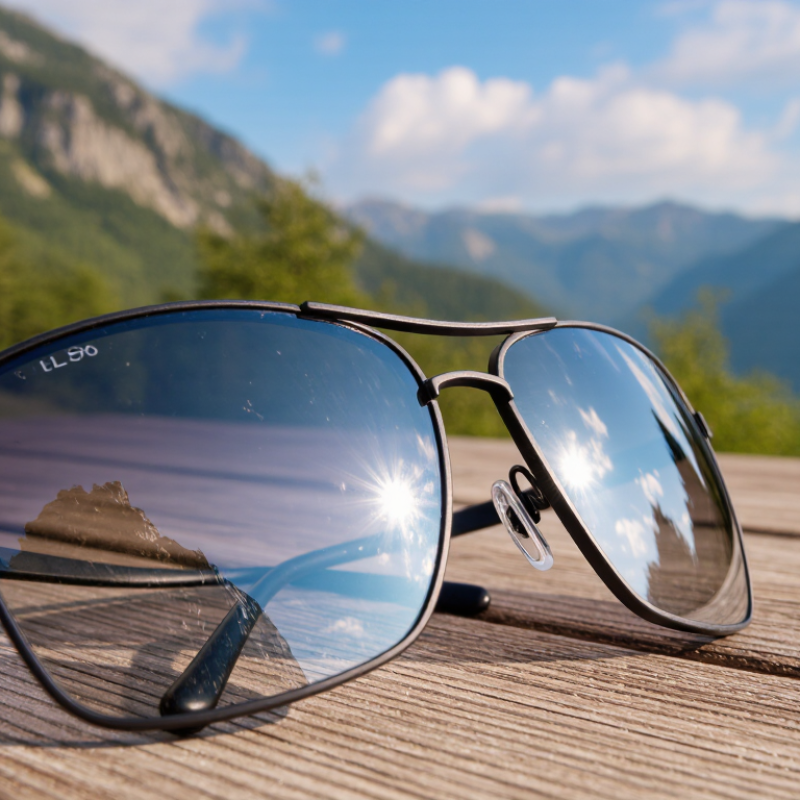
How Photochromic Sunglasses Work
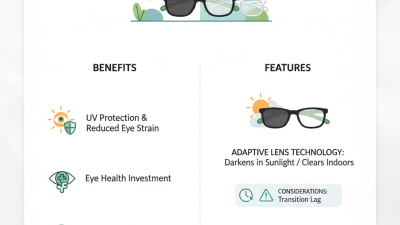
Photochromic lenses contain molecules that react to ultraviolet light. Outdoors, UV exposure changes their structure, so the lenses darken. Indoors, with less UV reaching them, they gradually return to a clearer state. The change is not instant. On a bright walk, you may notice the lenses still darkening a few minutes after stepping outside.
Temperature matters, too. Many photochromic lenses darken more in cooler weather and may stay lighter on hot summer days. Car windshields block much of the UV light that activates them, so lenses can remain fairly clear while driving. That surprises some first-time buyers. A photochromic pair is convenient, but it may not replace dedicated sunglasses in every setting.
When comparing lenses, ask how quickly they darken and clear under typical conditions, and whether the tint suits your daily routine. Check the visible-light transmission and UV protection separately; darkness alone does not prove adequate UV protection. If possible, test the glasses near a sunny window, then indoors. Results vary by lens design, temperature, and light exposure. I once expected one pair to adapt equally well everywhere. It didn’t, and I should have checked the driving limitation before buying.
Choosing Lens Tint, Speed, and Darkness
When choosing photochromic sunglasses, judge the darkest tint, not just how quickly the lenses change. ISO 12312-1 classifies sunglass filters by visible-light transmission: Category 2 transmits 18–43%, while Category 3 transmits 8–18%. These ranges offer a useful comparison, but they do not tell you exactly how one photochromic lens will behave. Ask an optician for the lens’s tested transmission range and whether its darkest state suits bright outdoor conditions. Check the label, too. A dark appearance alone does not confirm UV protection.
Speed matters when moving between sunlight and shade. Many photochromic lenses react to UV exposure, so they may darken less inside a car, where windows block much UV. Temperature can also affect the change; lenses often become darker in cooler weather and may take longer to clear. There is a catch. A lens that clears slowly can feel inconvenient when you step indoors, even if it works well outside. Try the transition near a bright window, then in open shade, and notice whether the tint feels comfortable rather than merely impressive. The World Health Organization recommends protection when the UV Index reaches 3 or higher; check the local forecast, since tint darkness is not a substitute for UV-rated lenses.
7 Tips for Buying Photochromic Sunglasses - Choosing Lens Tint, Speed, and Darkness
| Tip |
Buying Factor |
What to Look For |
Practical Guidance |
| 1 |
Visible Light Transmission (VLT) |
Select a light-to-medium tint for daily use, or a darker tint for bright outdoor conditions. |
VLT describes how much visible light reaches the eyes. A typical clear indoor state may transmit about 80–90% of light, while a dark outdoor state may transmit about 10–30%. Lower VLT means a darker lens. |
| 2 |
Tint Color |
Choose gray for neutral color, brown or amber for enhanced contrast, and green for a balanced appearance. |
Gray generally preserves natural color perception and is versatile for driving and everyday wear. Brown or amber can increase perceived contrast in variable light, while color preference and visual comfort should guide the final choice. |
| 3 |
Activation Speed |
Look for lenses that darken within roughly 30–60 seconds in strong ultraviolet light. |
Photochromic lenses usually change gradually rather than instantly. The exact speed varies with lens technology, ultraviolet intensity, temperature, and lens age. Ask for the stated darkening and clearing times under defined test conditions. |
| 4 |
Clearing Speed |
Prioritize fast clearing if you frequently move between bright outdoor areas and indoor spaces. |
Many lenses take several minutes to return close to their lightest state after exposure ends. Cold conditions can slow the change, while warm conditions may make the response faster. A short transition time improves convenience but does not eliminate the transition period. |
| 5 |
Temperature Performance |
Check performance ratings if you regularly use sunglasses in cold or very hot weather. |
Temperature affects photochromic chemistry. Cold temperatures commonly make lenses darker but slower to clear; heat can reduce the maximum darkness. Published performance data should include the temperature range when available. |
| 6 |
Driving Suitability |
Confirm whether the lenses darken sufficiently inside a vehicle before choosing them for driving. |
Most vehicle windshields block a substantial amount of ultraviolet radiation, so standard photochromic lenses may remain relatively light behind the glass. For frequent driving, compare the lens specification with an in-car demonstration or consider a dedicated sun lens if required. |
| 7 |
UV Protection and Fit |
Choose lenses labeled for 100% UVA and UVB protection and combine them with a close, comfortable frame fit. |
Tint darkness alone does not prove UV protection. Verify the UV protection specification, then check that the frame sits securely without pressure points. A larger or more wraparound shape can reduce peripheral glare, although it should not obstruct vision. |
Note: VLT ranges and transition times are typical guidance rather than universal specifications. Actual results depend on lens design, ultraviolet exposure, temperature, age, and use conditions.
Checking UV Protection and Lens Quality
7 Tips for Buying Photochromic Sunglasses
Checking UV Protection and Lens Quality
When buying photochromic sunglasses, check UV protection before judging the frame. Do not assume dark lenses block harmful rays. Look for clear wording such as 100% UVA and UVB protection or UV400 coverage. A trustworthy seller should provide test information from an accredited laboratory. Vague claims are not enough. Ask for the protection standard used in your region.
Inspect the lenses under bright, even light. They should look clear, without bubbles, scratches, cloudy patches, or uneven color changes. Hold the glasses at arm’s length and view a straight window frame through each lens. If the line bends or jumps, the lens may have optical distortion. I once missed this problem because the showroom lighting was too soft. That was careless.
Test the transition outdoors, but remember that car windshields can reduce activation. Check whether the lenses darken evenly and return to a lighter shade indoors. Compare both lenses for matching speed and color. Polarization is different from UV protection, so do not treat it as a substitute. Consider lens material, impact resistance, and the clarity around the edges. A comfortable fit matters too, yet perfect comfort cannot repair poor optical quality. Real-world testing reveals flaws that product descriptions often hide.
Matching Frames to Your Fit and Activities
7 Tips for Buying Photochromic Sunglasses
Matching the frame to your face and activities matters as much as lens technology. The Vision Council’s 2023 Consumer inSights Report found that 75% of U.S. adults use vision correction. Comfort, therefore, is not a minor detail.
Tip 1: Measure your bridge and temple fit. The frame should sit securely without pressing your nose.
Tip 2: Check cheek and brow clearance. Your lenses should not touch skin during movement.
Tip 3: Choose medium coverage for commuting, and wider coverage for hiking or cycling.
Tip 4: Test the frame with your helmet or hat. I once picked excellent lenses in a frame that pinched under a helmet. That mistake became uncomfortable quickly.
Tip 5: For driving, confirm the lenses activate adequately behind glass. Many windshields filter ultraviolet light, which can reduce darkening.
Tip 6: Select lenses with 99–100% UVA and UVB protection, as recommended by the American Academy of Ophthalmology. Darker does not always mean safer.
Tip 7: Match lens speed to your routine. Hikers may value rapid darkening after leaving shade, while office commuters may prefer a lighter indoor transition.
ISO 12312-1 provides a useful reference for general sunglass performance, but fit remains personal. The fit test is imperfect. Walk, turn, and bend before buying. A frame that shifts during a sunny ride needs reconsideration.