What are Photochromic Sunglasses Benefits and Features?
Photochromic sunglasses are becoming increasingly popular for their unique ability to adapt to changing light conditions. Dr. Rebecca Summers, an optical scientist and expert in lens technologies, asserts, "Photochromic sunglasses provide both convenience and protection, making them ideal for everyday use." These sunglasses darken in bright sunlight and clear up indoors.
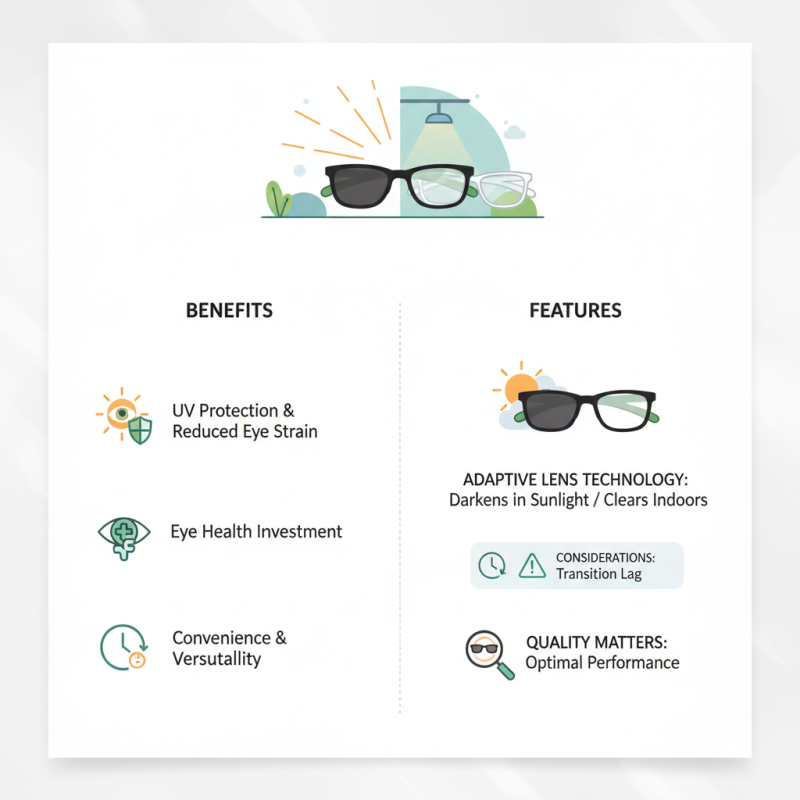
Their benefits extend beyond simple aesthetics. Photochromic sunglasses offer UV protection, reducing eye strain and safeguarding against harmful rays. This is especially important for those who spend considerable time outdoors. However, users should be aware of limitations, such as a lag time when transitioning between light settings.
While they are convenient, some individuals report a slight delay in changing tint. It's crucial to choose high-quality products for optimal performance. Photochromic sunglasses are a thoughtful investment for eye health. Their features combine functionality with style, offering a blend of benefits for everyday wearers.
Overview of Photochromic Sunglasses
Photochromic sunglasses are an innovative eyewear option designed for those who frequently transition between indoor and outdoor environments. These lenses change their tint in response to UV light, providing optimal comfort and protection throughout the day. The adaptability of the lenses allows for clear vision in various lighting conditions, enhancing outdoor activities like hiking or cycling.
One key advantage is their convenience. With these lenses, users do not need to switch between regular sunglasses and prescription glasses. This means fewer distractions and a more enjoyable experience while driving or engaging in sports. Imagine walking out into bright sunlight and your glasses adjusting in seconds. It’s that simple!
Tips: Always check the UV protection level of your photochromic lenses. Not all lenses provide the same level of defense. Also, consider your lifestyle needs. If you often drive, look for lenses specifically designed for improved vision during heavy sunlight.
While photochromic sunglasses have many benefits, they are not flawless. Some users may experience a slight delay in lens transition. This can be frustrating, especially when moving quickly between settings. Additionally, in very cold climates, the lenses may not change as effectively. It’s essential to weigh these factors when deciding on the right eyewear for you.
How Photochromic Lenses Work in Different Lighting Conditions
Photochromic lenses adapt to varying light conditions. They darken outdoors and fade indoors. This versatile response is due to special molecules within the lenses. These molecules react to UV light, causing the tint change. This feature offers comfort and protection in varying environments.
In bright sunlight, photochromic sunglasses provide excellent shielding from harmful UV rays. They reduce glare, which enhances visual clarity. Additionally, transitioning lenses are convenient for those who frequently move between indoors and outdoors. No need to switch glasses. This convenience is an attractive feature for many users.
Tips for maximizing the benefits: choose lenses with a fast transition time. A quicker response enhances comfort. Also, ensure the lenses are properly fitted for your frames. Ill-fitting glasses can compromise comfort and protection. Regularly clean your lenses to maintain clarity. This prevents scratches and prolongs the life of your sunglasses.
What are Photochromic Sunglasses Benefits and Features?
| Feature |
Description |
Benefits |
| Adaptive Tint |
Lenses darken in bright sunlight and clear up indoors. |
Convenient for transitioning between different lighting environments. |
| UV Protection |
Blocks harmful UV rays from the sun. |
Reduces the risk of eye damage and cataracts. |
| Visual Comfort |
Enhances visual clarity and reduces glare. |
Improves overall eye comfort and reduces eye strain. |
| Versatility |
Can be worn for various outdoor and indoor activities. |
Ideal for people who frequently transition between environments. |
| Style Options |
Available in various frames and lens colors. |
Allows for personal expression while providing eye protection. |
Benefits of Using Photochromic Sunglasses for Eye Protection
Photochromic sunglasses offer significant benefits for eye protection. Their ability to adapt to changing light conditions is one of the key features. Exposure to UV light triggers a chemical reaction that darkens the lenses. A report from the American Academy of Ophthalmology states that 90% of UV radiation can harm the eyes. This type of eyewear helps reduce the risk of cataracts and other eye diseases.
Beyond UV protection, photochromic sunglasses enhance comfort. They eliminate the need to switch between regular and tinted glasses. This is especially beneficial during outdoor activities. A study published in the Journal of Optometry found that users reported less eye strain and improved visual comfort. Additionally, they offer protection against glare, which can cause headaches and fatigue.
However, users should reflect on their specific needs. Photochromic lenses may not darken in vehicles due to windshield UV protection. There’s also a delay in transition speed, which might be inconvenient for some. Understanding these limitations helps users make informed choices. Balancing functionality with personal lifestyle choices is essential when selecting eyewear.
Comparative Analysis: Photochromic vs. Traditional Sunglasses
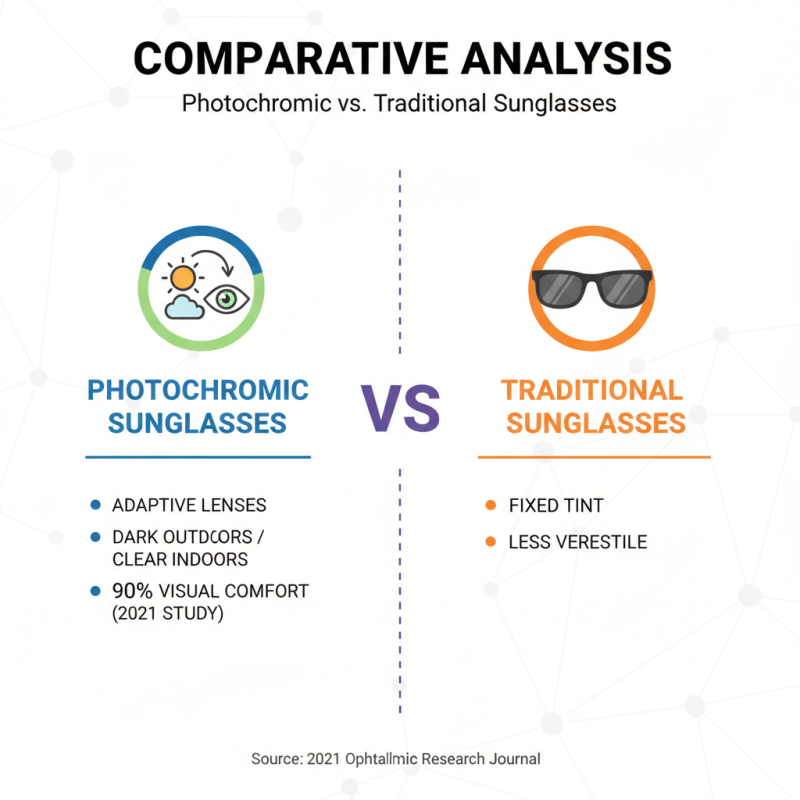
Photochromic sunglasses offer significant advantages over traditional options. These specialized lenses adapt to changing light conditions. They darken outdoors and return to clear indoors. A 2021 study noted that up to 90% of users reported improved visual comfort. Traditional sunglasses lack this feature. They remain fixed in tint, which might not suit all environments.
One key benefit of photochromic lenses is UV protection. A report from the American Academy of Ophthalmology states that UV exposure can lead to cataracts and other eye conditions. Photochromic lenses typically block 100% of UVA and UVB rays. This level of protection is crucial for long-term eye health.
Tips: When choosing sunglasses, consider lens quality. Look for those that meet ANSI Z80.3 standards for UV protection. Regular wear can help reduce eye strain. Remember, while photochromic lenses offer convenience, they may take time to adjust. Users should be aware of this lag in transitional shades. Consider your daily activities and lighting conditions when selecting eyewear. Each option has unique benefits, but finding what works best for personal needs is essential.
Factors to Consider When Choosing Photochromic Sunglasses
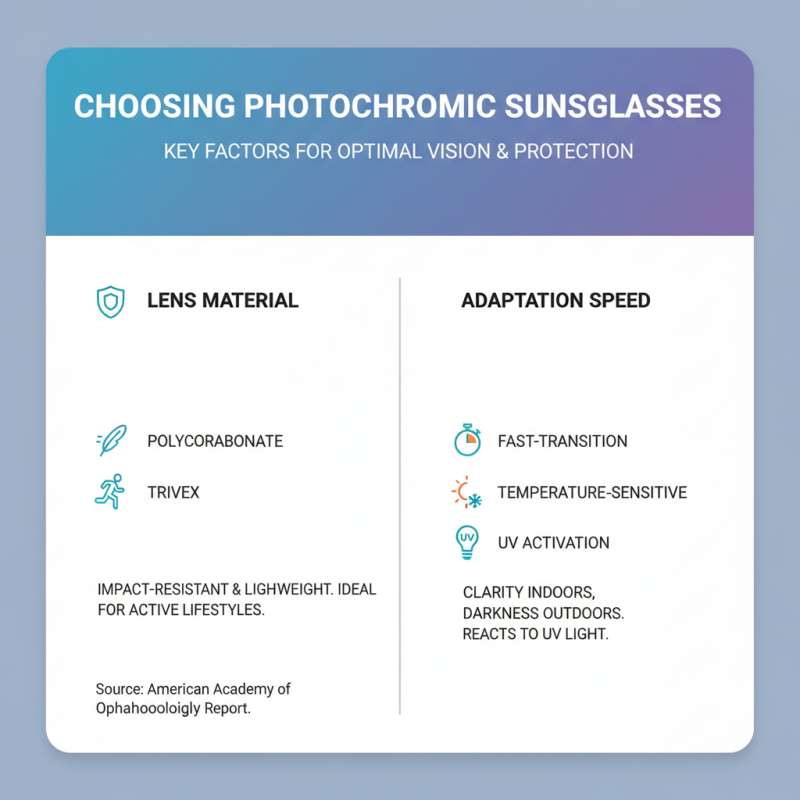
When selecting photochromic sunglasses, various factors must be considered to ensure optimal performance and protection. One key aspect is the lens material. Polycarbonate and Trivex materials provide impact resistance while being lightweight. These options are particularly useful for active individuals. According to a report by the American Academy of Ophthalmology, such materials help in maintaining the structural integrity of lenses in adverse conditions.
Another crucial factor is the level of UV protection offered. Look for lenses that block 100% of UVA and UVB rays. Data from the Vision Council shows that many users overlook this detail. UV protection is essential in preventing long-term eye damage. Lens darkness is also variable; some lenses transition to darker shades more quickly than others. This can affect comfort in different lighting conditions.
Furthermore, consider the lens coatings. Anti-reflective and anti-scratch coatings enhance durability and visual clarity. Many users find that without these coatings, their sunglasses can quickly become less effective. A survey by the Eyecare Business indicated that consumers often choose basic options, limiting their benefits. In this regard, a thoughtful selection process can lead to better visual health and overall satisfaction with photochromic sunglasses.