China Top 10 Single Light Reading Glasses Manufacturers
Clear, comfortable reading vision depends on more than a lens. Frame fit, lens consistency, material quality, and reliable production all matter. For buyers comparing China Top 10 Single Light Reading Glasses Manufacturers, these details can shape both user experience and supplier performance.
The need is substantial. The World Health Organization’s World Report on Vision (2019) states that at least 2.2 billion people have near or distance vision impairment worldwide. A Lancet Global Health analysis led by vision researcher Professor Rupert Bourne estimated that 1.8 billion people lived with presbyopia in 2015, with many lacking adequate correction. The figures describe a public-health need, not a sales forecast. That distinction matters.
The WHO report quotes Director-General Dr. Tedros Adhanom Ghebreyesus: “Eye health is critical to every aspect of life, from education and employment to social interaction and quality of life.” For readers, that can mean the difference between comfortably reading a label and holding it at arm’s length. Small details count.
This guide introduces manufacturers of Single Light Reading Glasses in China and the questions buyers should ask. Look closely at lens options, frame durability, quality-control processes, customization, and export experience. Request product specifications and samples where possible; a polished catalogue cannot replace hands-on checks. Supplier claims still need verification. Manufacturing capabilities vary, and published company information may not reveal everyday production consistency. The comparisons ahead aim to offer a practical starting point, not a substitute for independent due diligence.
Single-Vision Reading Glasses: Common Lens Powers in 0.25-Diopter Steps
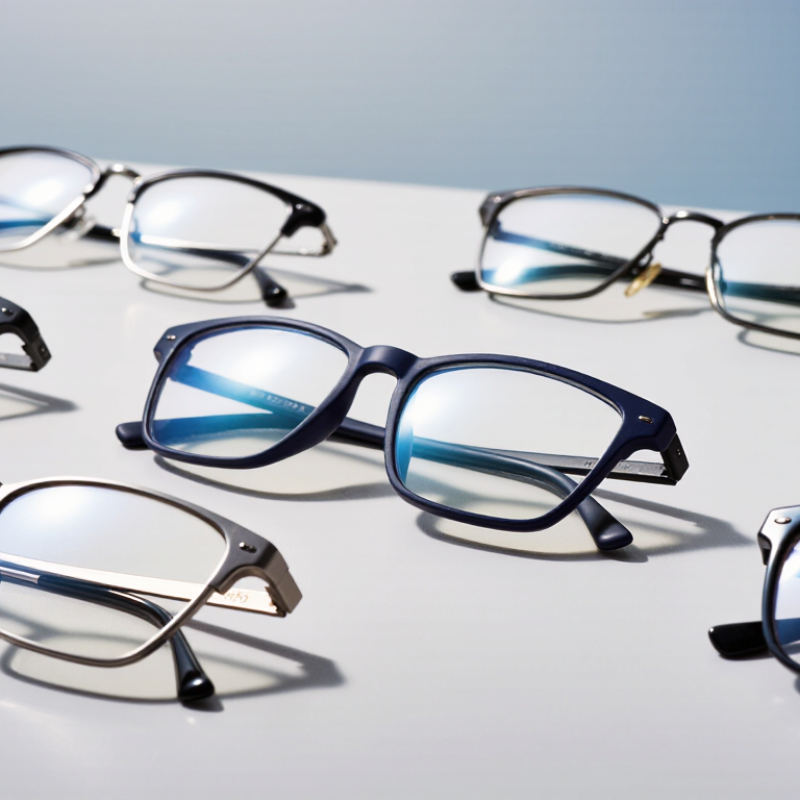
Single-vision reading glasses use the same corrective power across each lens. Common powers often rise in 0.25-diopter steps: +1.00, +1.25, then +1.50. A quarter-diopter change may feel subtle, but it can affect comfort when reading small print. For manufacturers, clear power labeling and consistent lens checks help buyers compare products accurately. Small steps matter.
The World Health Organization’s World Report on Vision (2019) estimates that at least 2.2 billion people worldwide have near or distance vision impairment. That figure highlights the importance of accessible vision care, not a reason to self-diagnose. Reading needs vary with working distance, lighting, and individual eyesight. A printed chart can guide a conversation, but it cannot replace a qualified eye examination. I still find power selection less straightforward than a neat list of numbers suggests.
Tips: Check the printed diopter value and test glasses at your usual reading distance. If one eye feels strained, or headaches persist, seek professional advice rather than moving up by guesswork.
China Top 10 Single Light Reading Glasses Manufacturers - Single-Vision Reading Glasses: Common Lens Powers in 0.25-Diopter Steps
Common single-vision reading lens powers shown in 0.25-diopter increments. This is a lens-power reference, not a manufacturer ranking.
| Lens Power (D) |
Approx. Focal Length |
Increment |
Typical Product Specification |
| +1.00 |
1.00 m |
— |
Single-vision plus-power lens for near tasks |
| +1.25 |
0.80 m |
+0.25 D |
Single-vision plus-power lens for near tasks |
| +1.50 |
0.67 m |
+0.25 D |
Single-vision plus-power lens for near tasks |
| +1.75 |
0.57 m |
+0.25 D |
Single-vision plus-power lens for near tasks |
| +2.00 |
0.50 m |
+0.25 D |
Single-vision plus-power lens for near tasks |
| +2.25 |
0.44 m |
+0.25 D |
Single-vision plus-power lens for near tasks |
| +2.50 |
0.40 m |
+0.25 D |
Single-vision plus-power lens for near tasks |
| +2.75 |
0.36 m |
+0.25 D |
Single-vision plus-power lens for near tasks |
| +3.00 |
0.33 m |
+0.25 D |
Single-vision plus-power lens for near tasks |
| +3.25 |
0.31 m |
+0.25 D |
Single-vision plus-power lens for near tasks |
Focal lengths are approximate and calculated as 1 divided by lens power in diopters. Available powers and product configurations vary by supplier. The appropriate lens power depends on individual vision needs; this table is for general reference only.
Lens Materials, Coatings, and Key Optical Terms for Reading Glasses
For single-vision reading glasses, lens material affects weight, thickness, and clarity. CR-39 plastic, with a refractive index near 1.50, suits many everyday prescriptions. Polycarbonate, around 1.59, is lighter and impact-resistant, but its lower Abbe value can create more color fringing near lens edges. Abbe value describes how much a lens separates light into colors. Higher generally means less chromatic dispersion. A 1.60-index lens may be thinner at the same power, though frame shape and prescription also matter. Thinner is not always better.
Coatings solve different problems. A hard coat helps resist scratches; it does not make lenses scratch-proof. Anti-reflective coating cuts reflections from lamps and screens, while UV protection depends on the lens’s filtering properties, not its tint. The World Health Organization’s World Report on Vision (2019) estimated that 2.2 billion people have near or distance vision impairment, with at least 1 billion cases preventable or unaddressed. That scale makes clear labeling useful. Check the diopter, the lens’s focusing power, and confirm that the optical centers align with the wearer’s pupils. Small details matter. Yet coating claims can sound more exact than the wearer’s actual experience; comfort still needs a real-world check.
Manufacturing Quality Benchmarks: ISO 8980-1 and Lens-Power Tolerances
For single-vision reading glasses, ISO 8980-1 provides a useful benchmark for uncut finished lenses, including requirements for their optical properties. Buyers comparing manufacturers should check which edition the supplier uses and ask for reports showing measured lens power. The acceptable tolerance depends on the lens specification; a single number should not be assumed to fit every reading power. Small differences matter. A calibrated focimeter can verify whether a lens marked +2.00 D measures within the relevant tolerance. Ask how often equipment is calibrated and whether checks cover routine production, not only display samples.
Good records help, but they are not the whole story. Still, paperwork can look better than practice. Request results from several production batches, along with clear procedures for isolating lenses that fail inspection. Confirm that the report identifies lens power and test conditions, and that the tested samples match the finished product being supplied. ISO 8980-1 does not, by itself, establish every aspect of a complete pair’s comfort, durability, or cosmetic finish. Inspect frame alignment and lens edges separately. One practical weakness in supplier reviews is trusting a clean certificate without checking traceability; a modest sample audit can reveal gaps that documents miss.
Single-Vision Reading Glasses: ISO 8980-1 Lens-Power Tolerances
Manufacturing quality benchmark: maximum permitted absolute back vertex power deviation by nominal lens power range.
ISO 8980-1 specifies a tolerance of ±0.12 D for powers up to 6.00 D, ±0.18 D above 6.00 D to 12.00 D, ±0.25 D above 12.00 D to 20.00 D, and ±0.37 D above 20.00 D. The chart shows the absolute tolerance magnitude; it is a technical benchmark, not a manufacturer ranking.
How to Compare China’s Top 10 Manufacturers by Capacity and Certifications
When comparing China’s top 10 single-light reading-glass manufacturers, separate installed capacity from dependable output. Ask for monthly production by frame type, shift pattern, and recent on-time delivery rates. Then check whether figures cover finished glasses or include subcontracted work. A factory tour should show practical details: lens inspection stations, packing space, and how rejected pairs are recorded. Small details matter.
Certification claims need equally careful checks. ISO’s 2022 Survey of Management System Standard Certifications recorded 426,716 ISO 9001 certificates in China. That national figure shows the scale of certification, not the quality of any individual eyewear supplier. Request the factory’s current certificate, issuing body, scope, and site address; confirm they match the actual production location. For reading glasses, ask for relevant product test reports and clear lens specifications. A certificate alone proves little.
Compare suppliers using the same evidence: audited monthly output, defect and rework records, sample consistency, and peak-season lead times. Ask how they control lens power and inspect finished pairs under documented procedures. A stated capacity may look impressive. It may also be a little optimistic. One useful test is a trial order followed by a repeat order, checking whether measurements, packaging, and delivery stay consistent. ISO 9001 is a management-system standard, not a guarantee that every pair meets your requirements.
Top 10 Chinese Manufacturers: Product Ranges, Export Markets, and Verification Data
A useful comparison of China’s ten leading single-light reading glasses manufacturers should show more than factory capacity.
Product ranges may include ready-made readers in several lens powers, lightweight frames, folding designs, and different nose-pad styles. Ask whether listed specifications match current samples. A catalog can look polished. The sample may tell a different story.
Export-market details help buyers assess practical experience.
Look for stated destination regions, typical order sizes, packaging options, and experience shipping to different climates. These details should be supported by records, not broad claims. Request recent, redacted shipment documents or customer references where appropriate. Some suppliers publish uneven information; that gap matters.
Verification data should connect each claim to evidence.
Check business registration details, production-site addresses, inspection records, and dated reports for relevant product testing. Compare sample measurements with the specification sheet, including lens power, frame width, and hinge movement. Keep a written record of discrepancies. It is easy to overlook small inconsistencies when a quotation is attractive. A ranking is only as reliable as its verification method, and public data may not settle every question.