Leave Your Message
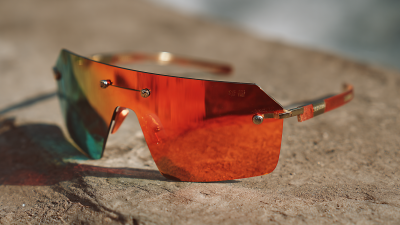
Choosing No Frame Sunglasses for global buyers requires more than following seasonal fashion. These lightweight styles can create a clean, almost invisible appearance. However, their minimal structure makes lens quality, bridge comfort, and hinge durability especially important. A pair may look elegant online but feel unstable after ten minutes of walking. That difference matters.
Dr. Gary Heiting, OD, an optometrist and eyewear writer, says, “Sunglasses are more than a fashion accessory.” His point is practical for international purchasing teams. Buyers should confirm ultraviolet protection, lens clarity, impact resistance, and product testing records before placing large orders. They should also examine nose pads, temple balance, screw strength, and packaging performance. Small components can cause costly returns.
Fit varies across markets. Asian, European, and North American customers may need different bridge dimensions and temple lengths. One universal size rarely serves everyone well. Product pages should show measurements clearly, including lens width, bridge width, and total frame length. Photos alone are not enough.
Material selection deserves equal attention. Polycarbonate lenses may support active lifestyles, while lightweight metal or TR materials can improve comfort. Yet every material has trade-offs. Some finishes scratch easily. Some nose pads discolor with heat and moisture. No checklist is perfect.
Global buyers should request samples, verify supplier documentation, and review labeling requirements in each destination market. Responsible sourcing also includes transparent manufacturing information and consistent quality control. The best No Frame Sunglasses combine visual simplicity with dependable protection, measurable comfort, and honest product claims. That balance is easy to describe, but harder to deliver.
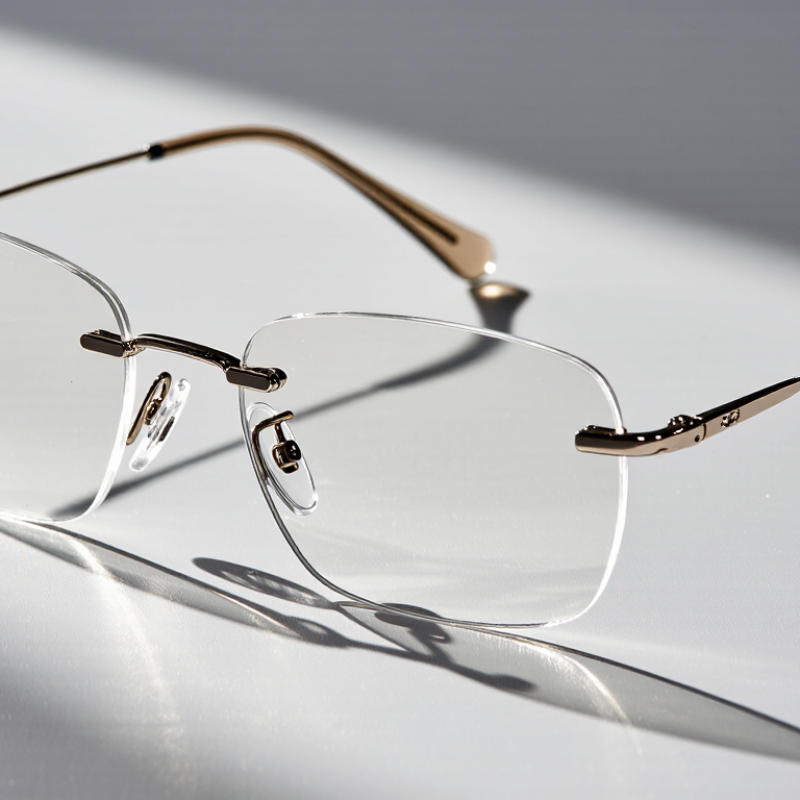
In 2023, global eyewear market estimates reached $115.9 billion, making rimless sunglasses a focused design segment. Rimless sunglasses have no surrounding frame. Their lenses connect directly to the bridge and temple arms. This structure creates a light, almost invisible appearance. However, “no frame” does not mean no support. Lens thickness, drilling quality, hinge strength, and bridge balance affect daily comfort.
For global buyers, inspect product drawings and request exact lens, bridge, and temple measurements. A reliable supplier should provide UV-protection test results and material details. Requirements may differ by destination, so buyers should verify local standards before placing large orders. Polarized lenses can reduce reflected glare near water or roads. They may also reveal screen visibility issues. That detail is easy to miss.
Tips: Check the screw area closely. Small fittings can loosen during shipping. Ask for a sample before bulk purchasing. Wear it for several hours, not five minutes. I once underestimated nose pressure because the sample looked comfortable indoors. Outdoor heat changed the fit. This is not a perfect selection method, but it exposes problems early. Choose impact-resistant lens materials when active use is expected. Yet lighter materials can scratch more easily, so surface coating deserves equal attention.
Practical specification guide for evaluating rimless sunglasses across international markets
| Evaluation Dimension | Recommended Benchmark for Rimless Sunglasses | Relevant Data or Standard | Why It Matters to Global Buyers |
|---|---|---|---|
| Product Definition | Lenses connected directly by a bridge, nose pads, and temple hardware without a surrounding eyewire rim. | Rimless construction minimizes visible frame material but places greater stress on mounting points and lens edges. | A clear definition helps buyers distinguish true rimless products from semi-rimless and conventional full-rim sunglasses. |
| UV Protection | Require documented protection against UVA and UVB radiation, preferably labeled UV400. | UV400 labeling generally indicates protection through wavelengths up to approximately 400 nanometres; independent test documentation is preferred. | UV protection is a health and compliance consideration, not simply a lens-color or fashion feature. |
| Lens Category | Choose the visible-light transmission category according to the intended environment. | Under EN ISO 12312-1, common categories include Category 2 at approximately 18–43% visible-light transmission and Category 3 at approximately 8–18%. Category 4 is approximately 3–8% and is not suitable for driving. | The same tint can perform differently in urban, beach, high-altitude, and driving conditions. |
| Lens Material | Prioritize impact-resistant materials for everyday travel and active use; use glass mainly where optical weight and scratch resistance are acceptable. | Common refractive-index references include CR-39 at about 1.50, polycarbonate at about 1.59, and standard glass at about 1.52. Exact performance depends on formulation and thickness. | Material selection affects weight, thickness, impact behavior, optical quality, and shipping durability. |
| Lens Edge Design | Specify polished, smoothly finished edges with no chips, sharp corners, or visible stress marks around drilled holes. | Rimless lenses commonly use drilled or grooved attachment points, creating localized mechanical stress. | Edge quality strongly influences durability, comfort, appearance, and return rates. |
| Bridge and Temple Stability | Check alignment, screw or pin security, hinge movement, and resistance to loosening during repeated opening and closing. | Rimless designs transfer loads directly through the bridge, nose-pad mounts, temple connectors, and lenses. | A stable connection is essential because the product has no eyewire to distribute mechanical stress. |
| Fit and Sizing | Publish lens width, bridge width, temple length, total front width, and nose-pad adjustment range in millimetres. | A typical size marking such as 52-18-140 represents lens width, bridge width, and temple length in millimetres. | Standardized measurements make online selection and cross-border purchasing more reliable. |
| Polarization | Offer polarization when glare reduction is important, especially for driving, boating, snow, and outdoor travel. | Polarized lenses reduce glare from reflective surfaces but may make some LCD displays harder to read depending on screen orientation. | The feature improves visual comfort but should be matched with the buyer’s electronic-device and occupational needs. |
| Coatings | Consider hard coating, anti-reflective treatment, oleophobic treatment, and hydrophobic treatment according to use conditions. | Coatings improve surface performance but do not replace UV protection or impact testing. | Coating specifications support durability, easier cleaning, and clearer vision in humid or high-glare environments. |
| Optical Quality | Require consistent lens power, acceptable prism, uniform tint, and distortion-free vision across the usable lens area. | Optical tolerances should be verified against the target market’s applicable eyewear standard, such as EN ISO 12312-1 or ANSI Z80.3. | Rimless lenses have fewer frame elements to conceal optical or cosmetic defects. |
| Safety and Compliance | Request laboratory test reports, labeling, warnings, and traceability documents for each target market. | Common reference frameworks include EN ISO 12312-1 for general-use sunglasses and ANSI Z80.3 for nonprescription sunglasses in the United States. | Requirements can differ by destination, product claim, intended use, and sales channel. |
| Packaging and After-Sales Support | Use a rigid protective case, cleaning cloth, care instructions, spare hardware where appropriate, and clear adjustment guidance. | Rimless products are more exposed to lens-edge and connector damage during transport than full-rim designs. | Protective packaging and repair support can reduce transit damage and improve customer satisfaction. |
| Best Buyer Match | Suitable for buyers prioritizing a lightweight, minimalist appearance and broad visual openness. | Less suitable for buyers needing maximum frame protection, highly active impact exposure, or frequent rough handling unless tested for those conditions. | Matching design strengths with usage conditions is more reliable than selecting by appearance alone. |