Leave Your Message

2026 Best Progressive Lenses for Global Buyers

Choosing the best Progressive Lenses for global buyers requires more than comparing prices or brand names. Prescription accuracy matters. So does the wearer’s daily routine, face shape, working distance, and tolerance for adaptation. A driver may need a wide distance zone. An office worker may need stronger intermediate vision. A frequent phone user may value a comfortable near zone. Small details change the result.

Dr. John A. Sheedy, a respected vision scientist and progressive lens researcher, described the central challenge clearly: “Progressive lenses are a compromise between distance, intermediate, and near vision.” That principle still guides responsible lens selection in 2026. Better designs can reduce unwanted blur, but no lens removes every trade-off. Buyers should examine corridor length, fitting height, lens material, coating quality, and after-sales support. Regional standards and professional dispensing practices also deserve attention.

This guide compares practical options for international customers. It considers optical performance, customization, durability, and value. It also looks at how suppliers handle prescription verification and remakes. Those details can be more important than a polished product page.

Real experience can be uneven. Even an advanced design may feel uncomfortable when measurements are rushed. A lower-priced lens may perform well for one wearer, yet disappoint another. That is not a perfect shopping story. It is the part many comparisons overlook. Careful fitting remains essential. A qualified optician should confirm the prescription, pupillary distance, fitting height, frame position, and intended visual tasks before purchase.

2026 Best Progressive Lenses for Global Buyers

What Progressive Lenses Are and How They Work

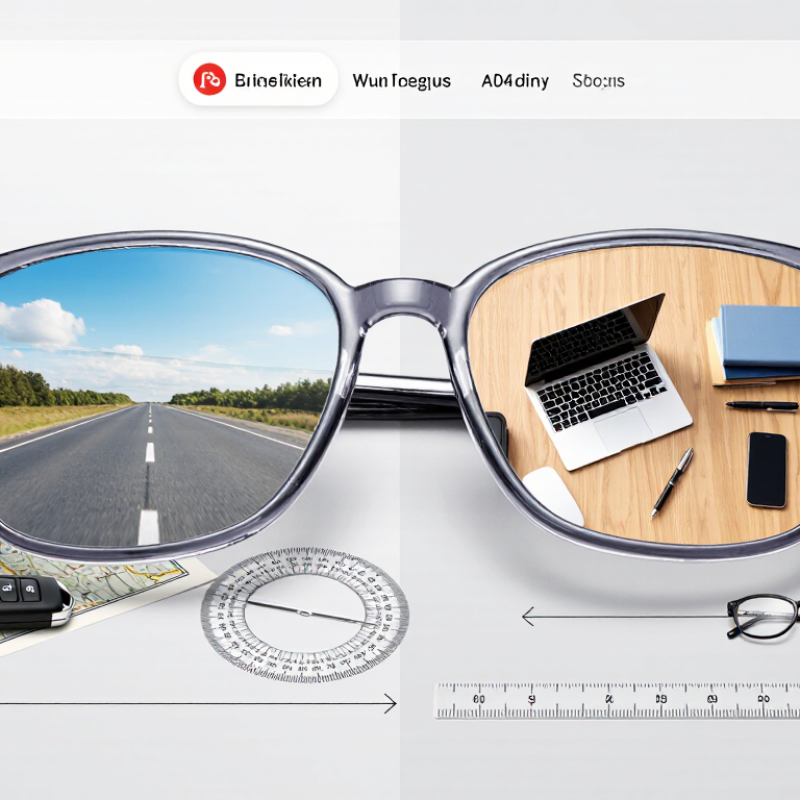
Progressive lenses correct several vision ranges within one lens, without visible dividing lines. The upper area usually supports distance vision, the middle corridor helps with computer screens, and the lower section assists with reading. Your eyes and head learn to find each zone. Small movements matter.

Unlike single-vision lenses, progressives change power gradually across the surface. This design supports a smoother shift from a road sign to a phone screen. However, the side areas may create mild blur or image distortion, especially during early use. Many wearers adapt within days or weeks, but comfort depends on prescription accuracy, frame position, and lens measurements. An eye-care professional should check eye health and confirm the prescription before fitting.

For global buyers, frame size and facial shape deserve careful attention. A lens fitted too high can make reading difficult. A narrow frame may reduce useful viewing space. Ask about fitting height, pupillary distance, lens material, coating options, and replacement support. Digital screens can also expose weak fitting choices. My practical concern is simple: people often blame the lens before checking the frame adjustment. That is not always fair. Even well-designed progressives may need fine-tuning after delivery. Expect an adjustment period. Keep expectations realistic.

Key Features of the Best Progressive Lenses in 2026

2026 Best Progressive Lenses for Global Buyers

The best progressive lenses in 2026 should match real visual habits, not only prescription numbers. A qualified optician should measure pupillary distance, fitting height, frame position, and daily viewing distances. Digital measurements can improve accuracy, especially with larger or curved frames. However, technology cannot replace careful consultation.

A smooth progression between distance, intermediate, and near zones remains essential. The intermediate area should support computer screens, dashboards, and shop counters without excessive head movement. High-quality lens materials can reduce weight and improve optical clarity. Reliable anti-reflective coatings help with office lighting and night driving, while UV protection supports outdoor comfort. Coating durability matters too. Scratches remain frustrating.

Personalized corridor length and near-zone width can make adaptation easier. Buyers should ask whether the design suits reading, mobile use, driving, or mixed work. A wider reading area may limit other zones, so compromises are unavoidable. No progressive lens performs perfectly for every wearer. Some users still need several days, or longer, to adapt.

Global buyers should confirm measurement procedures, warranty terms, remake policies, and after-sales support before ordering. Local dispensing rules and prescription requirements may differ between countries. A trustworthy seller should provide clear material information and explain realistic limitations. Independent professional verification is valuable when measurements were taken remotely. Small fitting errors can cause noticeable blur, dizziness, or unnecessary returns.

2026 Best Progressive Lenses for Global Buyers

Key Features of the Best Progressive Lenses in 2026

Higher refractive-index materials can reduce lens thickness for stronger prescriptions, while lower-index materials generally provide higher optical dispersion performance. The best progressive lens choice should also consider prescription strength, frame size, fitting accuracy, corridor design, UV protection, and adaptation needs. Values shown represent commonly available ophthalmic lens material indices rather than brand-specific performance.

Top Progressive Lens Types for Different Vision Needs

Choosing progressive lenses in 2026 starts with the wearer’s daily vision needs, not a fashionable label. A licensed eye-care professional should review prescription strength, reading distance, posture, and screen habits. Accurate measurements matter. Even a small fitting error can cause blurred side vision or unnecessary head movement.

For frequent computer users, occupational progressives can provide a wider intermediate zone and a shorter near section. They may feel comfortable at a desk, but they are not ideal for driving. General-purpose progressives offer balanced distance, intermediate, and reading areas for changing environments. Premium personalized designs may suit complex prescriptions, strong astigmatism, or demanding visual routines. Their success depends on precise fitting, not price alone.

Active drivers need a stable distance zone, clear peripheral awareness, and reliable night performance. People who read often may prefer a design with generous near access. New wearers usually benefit from patient adaptation guidance and realistic expectations. No progressive lens is perfect. A wider corridor can still feel narrow. Some users may need a second pair for computer work, which adds cost but improves comfort. A follow-up visit allows the optician to check lens height, frame position, and adaptation before changing the prescription.

How Global Buyers Should Compare Lens Quality and Pricing

2026 Best Progressive Lenses for Global Buyers

Global buyers should compare progressive lenses by performance, not price alone. A low quote may exclude fitting, delivery, taxes, or a suitable prescription design. Ask for the lens material, corridor options, scratch resistance, and adaptation support. Price needs context.

Lens quality depends on accurate measurements and frame selection. Pupillary distance alone is not enough. The provider should check fitting height, pantoscopic tilt, face-form angle, and the frame’s position. A wider reading zone may help office users, while drivers often need stable distance vision and reliable glare control. Optical professionals should explain these trade-offs in plain language. Fit changes everything.

I once focused too heavily on the listed lens price and overlooked the fitting process. That comparison was incomplete. Global buyers should request a written quotation with currency, warranty terms, remake conditions, shipping costs, and local tax responsibilities. Confirm whether an optician reviews the prescription before production. Independent product documentation is useful, but it should not replace professional verification. Regional price differences can reflect labor, customization, and after-sales service, not only lens quality. A cheaper lens may still work well, but only when its design matches the wearer’s daily tasks, prescription, and frame.

Buying, Fitting, and Caring for Progressive Lenses Worldwide

Buying progressive lenses worldwide requires more than comparing prices. Start with a current eye examination from a qualified optometrist or ophthalmologist. Your prescription should include distance, near, and addition measurements. Ask for your pupillary distance and fitting height as well. These details affect how comfortably your eyes find each viewing zone.

A reliable seller should explain lens materials, corridor design, delivery timing, warranty terms, and return conditions. Check whether a local optical professional can adjust the frame after delivery. Remote measurements can be useful, but they have limits. A small fitting error may cause blur, head movement, or headaches. I have learned that even accurate numbers cannot replace a careful, in-person frame check. Choose a stable frame that fits your nose and temples without slipping. Allow several days for adaptation, while remembering that persistent discomfort deserves professional review.

Tips: Clean lenses with lukewarm water and a mild, approved solution. Use a microfiber cloth, not clothing or paper towels. Store glasses in a hard case. Avoid leaving them in a hot car. Have the frame adjusted when it feels uneven. For international purchases, keep your prescription, measurement record, and order details. Local follow-up support can matter more than a slightly lower price. Your visual habits matter too. Tell the optician whether you read, drive, use screens, or work outdoors, because each task influences the fitting choice.

2026 Best Progressive Lenses for Global Buyers - Buying, Fitting, and Caring for Progressive Lenses Worldwide
Lens Category Key Buying Dimension Typical Specifications or Characteristics Who It Suits and What to Check Worldwide Buying Considerations
General-Purpose Progressive Viewing range Distance, intermediate, and near vision in one lens, with no visible dividing line. The usable reading and intermediate areas depend on the prescription, add power, corridor length, and lens design. Suitable for everyday activities such as walking, shopping, driving where legally permitted, computer use, and reading. Ask for the recommended fitting height and minimum frame height before ordering. Confirm that the prescription format, cylinder notation, axis format, and pupillary-distance method are accepted by the optical provider in the destination country.
Short-Corridor Progressive Frame compatibility Designed for smaller or shallower frames. A shorter corridor places the distance-to-near progression into less vertical lens space, but may provide narrower intermediate or near zones than a longer-corridor design. Useful when the wearer prefers a compact frame. The frame must still provide sufficient vertical fitting height; a short corridor does not eliminate the need for accurate measurements. Frame dimensions can vary between countries. Request the complete eye-size, bridge, temple-length, and fitting-height measurements rather than relying only on a product photograph.
Long-Corridor Progressive Visual-zone distribution Uses more vertical lens space for the progression from distance to near. It can offer a broader-feeling intermediate transition when used with a suitably deep frame. Often considered for larger frames or wearers who spend substantial time switching between distance and intermediate tasks. Verify that the selected frame has adequate depth. Check whether the seller measures monocular fitting heights. Separate right- and left-eye measurements are important when the eyes are not positioned symmetrically in the frame.
Occupational or Office Progressive Primary working distance Optimized for near and intermediate distances rather than unrestricted distance viewing. Some designs support desk, room, or wide-room working ranges. Appropriate for computer work, documents, meetings, and indoor tasks. It is generally not a substitute for a full-distance progressive when walking outdoors or driving. Measure the actual screen distance, keyboard distance, reading distance, and typical room range. These lenses should be clearly labeled for their intended working environment.
High-Add Progressive Near addition Uses a higher near addition to support close work. Higher add powers can make the intermediate and near zones feel more restricted and may require more precise positioning. Needs careful binocular refraction, fitting, and adaptation support. Ask whether a separate reading or occupational pair would be more practical for extended close work. The near addition should be prescribed by a qualified eye-care professional. Do not select it solely from age, online calculators, or a previous near-power estimate.
High-Index Progressive Thickness and weight Higher-index materials can reduce center or edge thickness compared with lower-index materials for some prescriptions. The actual result also depends on frame size, lens shape, prescription, and material design. May be considered for stronger prescriptions or when reducing lens thickness is important. Ask about Abbe value, optical performance, impact standards, and total lens weight. Material names and index categories may differ by market. Request the exact refractive index, coating description, impact certification, and care instructions in writing.
Polycarbonate or Trivex-Type Material Impact and material performance Polycarbonate and Trivex-type materials are commonly selected where impact resistance and light weight are priorities. Their optical properties, thickness behavior, and scratch resistance differ. Can be useful for children, active users, and safety-oriented applications. A material choice does not replace the need for a properly fitted frame and appropriate protective eyewear. Safety requirements are jurisdiction-specific. Confirm the applicable impact standard for occupational, sports, or industrial use instead of assuming ordinary prescription lenses provide certified protection.
Photochromic Progressive Light response Darkens in response to suitable ultraviolet exposure and becomes clearer indoors. Performance varies with temperature, UV availability, lens material, and the vehicle windshield. Helpful for changing outdoor light conditions. It should not automatically be treated as a substitute for prescription sunglasses, especially for driving or strong glare. UV levels, climate, temperature, and windshield filtering differ by region. Ask whether the lens activates behind the intended vehicle windshield and what warranty terms apply internationally.
Polarized Progressive Sun Lens Glare reduction Reduces selected reflected glare and provides tinted sun protection. Polarization does not replace ultraviolet protection; the lens should also provide appropriate UV filtering. Useful for driving, water activities, snow, and bright outdoor environments. Check compatibility with digital displays because some screens may appear darker or change appearance at certain angles. Confirm the tint category, UV specification, and local rules for driving lenses. Very dark tints may be unsuitable for low-light conditions or certain driving situations.
Digital-Device Oriented Progressive Intermediate posture and distance May be designed around frequent screen use and intermediate viewing. No lens can prevent digital eye strain caused by prolonged viewing, poor lighting, dry eye, or unsuitable screen position. Provide the actual device distance and screen height to the optician. Use regular breaks, comfortable lighting, proper posture, and appropriate screen settings alongside the prescription. Screen size, workstations, and typical viewing distances vary. A remote order should collect task-specific measurements instead of using a generic “computer” selection.
Personalized or Freeform Progressive Customization data May use prescription, monocular pupillary distances, fitting heights, frame position, pantoscopic angle, wrap angle, vertex distance, and wearing habits to optimize the lens design. Most valuable when the measurements are accurate and the frame is properly adjusted. Personalization cannot correct an inaccurate prescription or a poorly fitting frame. Ask which measurements are actually collected, how they are verified, and whether the final lens is made for the specific frame rather than only the prescription.
Fitting and Verification Required measurements Common measurements include binocular or monocular pupillary distance, fitting height for each eye, frame dimensions, bridge fit, vertex distance, and frame alignment. The frame should be adjusted before final measurements. After delivery, verify distance vision, near vision, comfort, centration, frame position, and the absence of avoidable lens or mounting errors. For online or cross-border purchases, use a local optician for measurement and post-delivery adjustment whenever possible. Keep the written prescription and measurement record.
Adaptation and Remakes Adjustment period Many new progressive wearers need time to learn the head and eye movements required for different viewing zones. Adaptation varies with prescription changes, add power, prior lens type, and fit. Start in a safe, familiar environment and move the head toward the object being viewed. Seek professional review if vision remains blurred, distorted, uncomfortable, or unsafe after a reasonable adaptation period. Before purchase, check the adaptation, return, remake, customs, and refund policies. International return shipping and local fitting charges may not be included.
Cleaning and Daily Care Coating preservation Rinse away loose dust when practical, use clean hands, apply a mild lens-cleaning solution, and dry with a clean microfiber cloth intended for optical lenses. Avoid dry rubbing when grit is present. Do not use household glass cleaner, solvents, abrasive products, tissues, clothing, or hot water, as these may damage coatings or leave particles on the surface. Cleaning-product ingredients and water quality differ by location. Follow the care instructions supplied with the lenses and carry a protective case when traveling.
Storage and Temperature Long-term durability Store lenses in a hard case with the lenses facing upward or protected. Avoid prolonged exposure to high heat, such as a parked vehicle, sauna, radiator, or direct intense sunlight. Heat can affect lens coatings, frames, and adhesives. Do not leave progressive glasses loose in a bag or place them lens-down on a hard surface. Travelers should account for hot climates, high-altitude sunlight, humidity, and local repair access. Carry a backup pair when vision correction is essential.
Eye Health and Prescription Review Professional supervision Progressive lenses correct refractive error but do not diagnose or treat eye disease. Prescription needs can change because of age, health conditions, medication, or normal refractive changes. Obtain a current eye examination and prescription from a qualified eye-care professional. Sudden vision loss, flashes, a large increase in floaters, severe eye pain, or a curtain-like shadow requires urgent medical attention. Use a licensed professional familiar with the regulations where the examination and dispensing occur. Keep copies of prescriptions and medical records when purchasing internationally.
Important: Specifications described as typical are general guidance rather than a substitute for an eye examination, prescription verification, professional fitting, or the lens manufacturer's instructions. Available materials, coatings, safety standards, warranties, and return rules vary by country.