What are Progressive Lenses and How Do They Work?
Progressive Lenses offer a modern solution for those who require multiple prescriptions. These lenses seamlessly blend different vision needs into one pair. They provide clear vision at all distances: near, intermediate, and far.
Many people struggle with traditional bifocals or trifocals. These older lens types create visible lines that can disrupt one's appearance and functionality. Progressive Lenses eliminate that issue, offering a smooth transition between different vision zones. This innovation enhances daily activities, from reading a book to checking the time on a watch.
However, adapting to Progressive Lenses can be challenging. Some users may experience distortion or difficulty focusing, especially initially. The learning curve varies among individuals. Consulting an eye care professional is crucial to ensure the right fit and prescription. Your comfort and clarity depend on expert guidance. This lens technology is evolving, and understanding its intricacies is essential for a satisfactory experience.

What Are Progressive Lenses?
Progressive lenses are multifocal glasses designed for people with presbyopia, a common age-related vision condition. They offer a seamless transition between different prescriptions for distance, intermediate, and near vision. Unlike traditional bifocals or trifocals, progressive lenses provide a gradient of lens powers, allowing for a more natural viewing experience.
According to the Vision Council, nearly 90 million adults in the U.S. require vision correction. Among them, many prefer progressive lenses for their versatility. Users often report improved comfort and satisfaction, particularly in daily activities such as reading or using digital devices. However, adjusting to progressive lenses can take time. Some may experience a distorted peripheral vision initially, which could lead to frustration.
Tips: When choosing progressive lenses, ensure that your optometrist performs a thorough fitting. A proper alignment is crucial for optimal vision. Additionally, wear your new lenses consistently for a few weeks. This helps your eyes adapt better. Remember, everyone’s vision is unique, and what works for one person may not work for another. Taking the time to understand your specific needs is essential.
What are Progressive Lenses and How Do They Work? - What Are Progressive Lenses?
| Feature |
Description |
| Type of Lens |
Multifocal lenses designed for correcting vision at multiple distances |
| Design |
Seamless transition zones between different optical powers without visible lines |
| Benefits |
Allows for clear vision at near, intermediate, and far distances |
| Usage |
Commonly used by people with presbyopia or those needing multiple prescriptions |
| Adaptation Period |
Users may require a short period to adjust to the lens' design |
| Customization |
Can be tailored to individual prescriptions and lifestyle needs |
| Care Instructions |
Clean regularly with microfiber cloths and appropriate lens cleaner |
| Cost Range |
Typically ranges from $200 to $600, depending on lens features and coatings |
The Design and Structure of Progressive Lenses
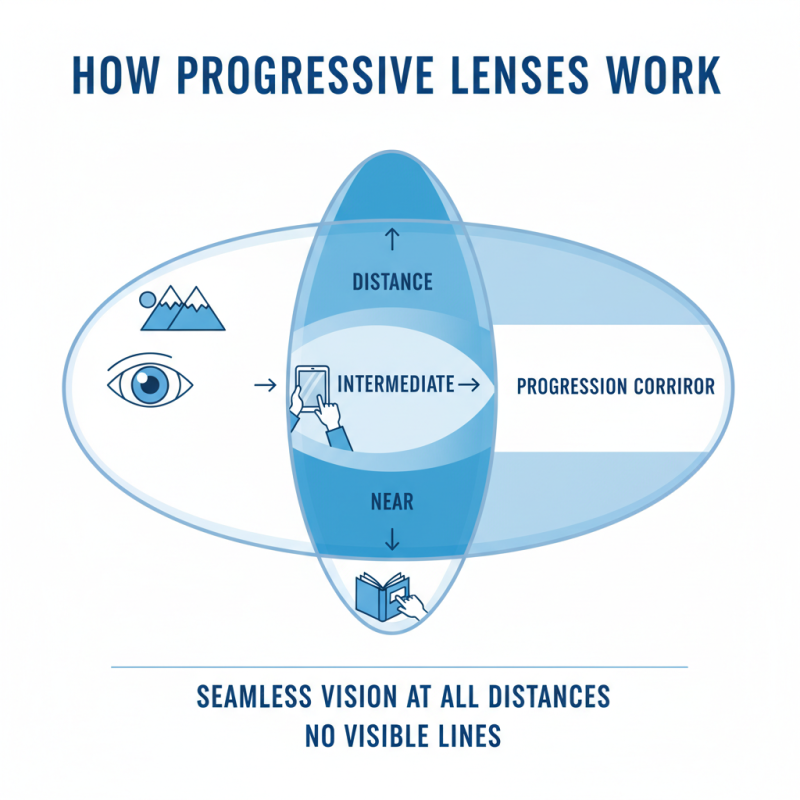
Progressive lenses are designed for those who require multiple prescriptions in one pair of glasses. The structure of these lenses allows for a smooth transition between different vision zones. They cater to various sight needs, from reading to distance vision. The unique feature is a gradient that blends the lenses seamlessly.
The design includes three main areas: distance, intermediate, and near vision. Each zone gradually transitions without noticeable lines. This design provides a natural visual experience. Users can look up to see far, shift their gaze for mid-range tasks, or glance down for reading. It's important to know that adaptation may take time. Some users might feel dizzy or experience distortion initially.
The optical technology behind progressive lenses involves advanced manufacturing techniques. These create precise curvature and customizable prescription profiles. It's a complex process that requires expertise. Users' feedback is essential to refine designs and enhance comfort. As with any eyewear solution, finding the right fit is crucial for optimal performance. A little patience in the adjustment phase can lead to rewarding results.
How Progressive Lenses Work for Vision Correction
Progressive lenses are a popular solution for those with presbyopia. They offer a seamless transition between different focal points. This design eliminates the visible lines found in bifocals, allowing for a more natural visual experience. They help users see clearly at various distances: near, intermediate, and far.
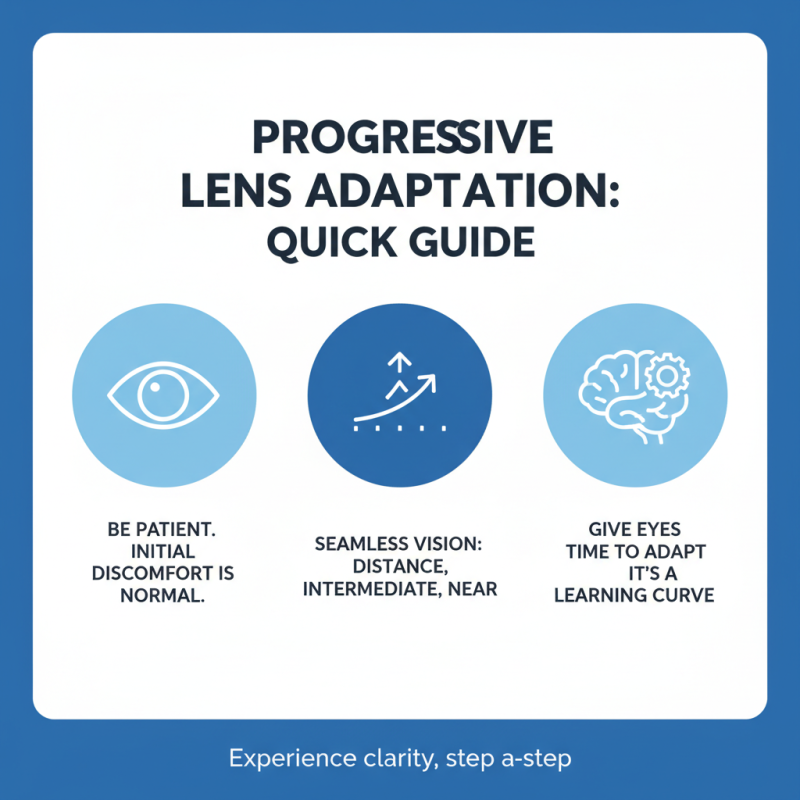
When you wear progressive lenses, you may initially find it challenging. The adjustment period can be uncomfortable. Some users report slight distortions or difficulty finding the right focal point. This is a normal part of adapting to the lenses. The prescription gradients require time to get used to, and this learning curve varies among individuals.
The design of progressive lenses is intricate. Each lens is customized based on the wearer’s prescription and lifestyle. This aspect ensures that the wearer achieves optimal vision correction. Fitting them properly is essential; an improper fit can lead to frustration. So, consulting with an eye care professional is crucial. They help to balance comfort and functionality, enhancing your overall visual experience.
Benefits of Using Progressive Lenses Over Traditional Lenses
Progressive lenses offer a seamless vision solution for individuals with presbyopia and other vision issues. Unlike traditional lenses, which have distinct lines separating different optical zones, progressive lenses provide a gradient of magnification. This means that users can enjoy a smooth transition between seeing clearly at all distances—near, intermediate, and far. This innovation eliminates the need to switch glasses, reducing the frustrations of traditional bifocals or trifocals.
Choosing progressive lenses can significantly enhance daily life. They improve comfort during various activities, like reading or using a computer. Users appreciate the convenience of having one pair of glasses for all tasks. Additionally, the aesthetic advantage is clear: progressive lenses look like regular glasses. No visible lines detract from your appearance.
Tips for adjusting to progressive lenses include wearing them consistently, even if they feel different initially. Take time to practice and allow your eyes to adapt. If you experience discomfort, revisit your eye care professional for an evaluation. Keep in mind that some people may experience slight distortion at the edges initially. This is normal and typically improves with time and usage.
Tips for Adjusting to Progressive Lenses
Adjusting to progressive lenses can be a journey. Many people experience initial discomfort. This is normal. Your eyes need time to adapt. Progressive lenses offer seamless vision for distance, intermediate, and near. However, they can feel different than regular lenses.
Take it slow. Start by wearing your progressive lenses for a few hours each day. Gradually increase the time as you feel more comfortable. Hold reading materials at a distance you find clear. This might change as your vision adjusts. Some users find it helpful to move their head instead of just their eyes. This simple change can make a big difference.
If you feel dizzy or have headaches, don't be alarmed. These sensations often fade with time. It’s crucial to visit your eye care professional if discomfort persists. They can provide guidance tailored to your needs. Adjusting to progressive lenses is a unique experience that varies for everyone. Embrace this adaptive phase, as it can lead to improved vision.