How to Choose the Best Reading Sunglasses for Your Needs?
Choosing the right Reading Sunglasses can enhance your reading experience while protecting your eyes. Recent studies indicate that over 80% of adults experience visual discomfort when reading outdoors. This issue can be alleviated with the proper lenses.
Reading Sunglasses are not just a fashion statement; they serve a functional purpose. UV protection, glare reduction, and magnification are key features to consider. According to the Vision Council, nearly 60% of people neglect to wear adequate sunglasses while reading outside. This leaves their eyes vulnerable to harmful rays and strain.
The market offers an overwhelming variety of styles and functionalities. Not all Reading Sunglasses are created equal, and this can lead to confusion. It’s crucial to find the right fit for your needs. In a world full of options, making a poor choice could lead to discomfort and eye issues. Consider your lifestyle and preferences carefully as you choose.
Understanding the Importance of UV Protection in Reading Sunglasses
When considering reading sunglasses, UV protection is crucial. Research shows that 90% of UV radiation can penetrate through clouds. This means you can be exposed even on overcast days. UV rays can damage your eyes, leading to cataracts or other serious conditions.
Reading sunglasses should block 100% of UVA and UVB rays. Many ignore this aspect when choosing their eyewear. A study by the American Academy of Ophthalmology states that prolonged exposure to UV light can lead to macular degeneration. This age-related eye disease severely affects vision. It's vital to ensure that your sunglasses offer high UV protection.
Additionally, the lens color matters. Darker lenses don’t always mean better UV protection. Some tinted lenses may not block UV rays effectively. Clear lenses with UV coating can be just as protective. It's essential to check the certification on the sunglasses before making a purchase. Many assume that all sunglasses provide adequate UV protection, which may not be the case. Make informed choices for your eye health.
Evaluating Lens Options: Prescription, Non-Prescription, and Photochromic
Choosing the right lenses for your reading sunglasses is crucial. Many factors come into play. Prescription lenses are great for those with vision impairments. According to a recent report by the Vision Council, about 75% of adults use some form of vision correction. If you require glasses for reading, getting prescription sunglasses ensures clarity and comfort.
Non-prescription lenses might appeal to those with good vision but who seek UV protection. They often enhance contrast, making text easier to read outdoors. A study from the American Optometric Association indicates that glare can reduce reading speed by 20%. Non-prescriptive options can help mitigate this issue.
Photochromic lenses, which adjust to light changes, offer versatility for readers. They darken in bright sunlight, providing sun protection while returning to clear indoors. A survey showed that 60% of users appreciate this adaptability. However, users should reflect on their habits. Some find these lenses may not transition quickly enough for their needs. This is an important consideration for frequent readers.
The Role of Lens Tint and Polarization in Visual Clarity
When selecting reading sunglasses, lens tint and polarization significantly impact visual clarity. A study by the American Optometric Association shows that the right tint can enhance contrast and reduce glare. Tinted lenses can filter out specific wavelengths of light, making text easier to read in bright conditions. For instance, gray tints reduce brightness while providing true color perception. Brown or amber tints improve contrast. Users often find that these colors help when reading outdoors.
Polarization is another critical feature. Polarized lenses reduce glare from reflective surfaces, such as water or pavement. According to research, over 40% of people experience glare discomfort in bright environments. Polarized sunglasses can alleviate this discomfort, allowing for a more enjoyable reading experience. However, it’s crucial to recognize individual preferences. Not everyone appreciates the way polarized lenses can distort perception of certain surfaces.
Choosing the best options requires personal reflection on reading habits. Consider where you’ll read most often. Some may need strong polarization for outdoor use. Others might prefer lighter tints for indoor environments. Experimenting with different options is essential, as not all lenses work the same for each person.
How to Choose the Best Reading Sunglasses for Your Needs?
This chart illustrates the key factors to consider when choosing the best reading sunglasses. Each factor is rated on a scale from 1 to 10, highlighting the significance of lens tint, polarization, UV protection, light transmission, and comfort level in visual clarity.
Assessing Fit and Comfort: Key Measurements for Optimal Performance
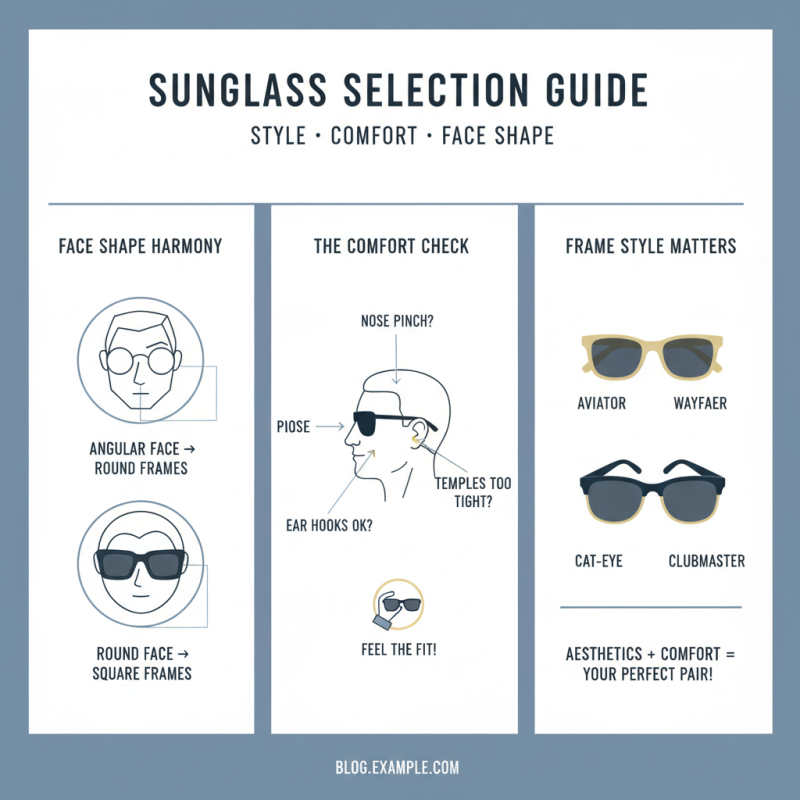
Choosing the right reading sunglasses goes beyond style. Fit and comfort are essential for prolonged use. Industry reports suggest that improper fit can lead to discomfort. Surveys indicate that 70% of users experience issues due to poor sizing.
Key measurements play a crucial role in finding the right pair. The frame width should match your face. A good rule of thumb is that the frame should not exceed your facial width. Temples should sit snugly without pinching. A survey indicated that 65% of wearers value comfort over brand recognition.
Nose pads can also influence comfort. Many users overlook this detail. Adjustable nose pads help ensure a comfortable fit. It might take several tries to find the perfect match. Don't rush the process. Take your time in assessing various options. Your eyes deserve the best protection while reading.
How to Choose the Best Reading Sunglasses for Your Needs?
| Measurement |
Importance |
Recommendations |
| Lens Width |
Affects field of vision |
54-62mm for adults |
| Bridge Width |
Ensures comfortable fit |
Bridge width of 16-24mm |
| Temple Length |
Improves stability on the face |
130-150mm for standard sizes |
| Frame Width |
Determines overall fit |
Total width of 120-150mm |
| Lens Height |
Impact on coverage and style |
Height of 30-50mm is common |