How to Choose the Best Navigator Sunglasses for Your Needs?
Navigator Sunglasses blend style and functionality seamlessly. They are favored by outdoor enthusiasts and casual wearers alike. Studies show that proper UV protection is crucial. The Vision Council reports that 75% of people know about UV rays' harmful effects yet ignore sunglasses. This is alarming, given that Navigator Sunglasses offer substantial benefits.
Choosing the right pair can be overwhelming. With countless brands and styles available, making an informed decision is vital. Factors like lens quality, frame design, and fit matter greatly. A misstep in selection could lead to discomfort or inadequate protection. Many individuals overlook the impact of a poor fit on performance.
Moreover, not all Navigator Sunglasses provide the same features. Some may lack adequate polarization or scratch resistance. This could diminish your outdoor experience. It's important to consider the specific activities you’ll engage in when purchasing. Investing time in the selection process can lead to a more satisfying choice.

Understanding the Key Features of Navigator Sunglasses
Navigator sunglasses can enhance your outdoor experiences, but choosing the right pair can be tricky. Key features make all the difference. Lens type is crucial. Polarized lenses reduce glare, making them ideal for sunny days. UV protection is vital too. Look for lenses that block 100% of harmful rays.
Frame style matters. A lightweight frame ensures comfort during long wear. Adjustable nose pads can create a better fit. Consider the lens width as well. Wider lenses offer more coverage, which may be necessary for certain activities. Color and tint also affect performance. Dark tints reduce brightness, while lighter tints boost visibility in low light.
Reflect on your needs. Do you need them for water sports or casual outings? Think about the environment you’ll be in. Each situation may require different features. Sometimes the best choice isn’t clear. Try several pairs to see what feels right. Comfort and style should align with functionality for the best use.
How to Choose the Best Navigator Sunglasses for Your Needs? - Understanding the Key Features of Navigator Sunglasses
| Feature |
Description |
Importance |
| Lens Material |
Polycarbonate is lightweight and impact-resistant, while glass offers optical clarity. |
High |
| UV Protection |
Blocks harmful UV rays to protect your eyes from sun damage. |
Essential |
| Lens Tint |
Different tints enhance contrast and reduce glare for better visibility. |
Moderate |
| Frame Fit |
A good fit prevents slippage and enhances comfort for long-term wear. |
High |
| Polarization |
Reduces glare from reflective surfaces, ideal for nautical and outdoor activities. |
High |
| Lens Shape |
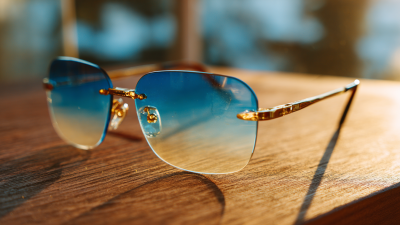
Navigator lenses are typically large and rectangular, providing a wide field of view. |
Moderate |
Evaluating Lens Types for Optimal Vision and Protection
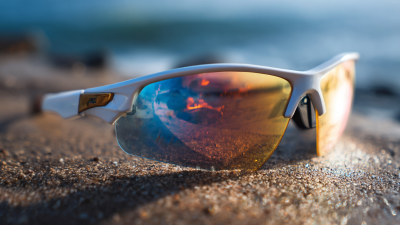
When choosing navigator sunglasses, lens type plays a crucial role. Polarized lenses are popular for their glare reduction. They enhance clarity on water or snowy surfaces. This can be vital for navigation and outdoor activities. However, they may not work well with screens. If you frequently check GPS devices, consider other options.
Photochromic lenses are another choice. They adjust tint based on sunlight intensity. This adaptability is useful for varying light conditions. However, the transition may not be instant. In moments of fast-paced navigation, this delay can be a drawback. Evaluating personal needs is key here.
Gradient lenses offer a different approach. They are darker at the top and lighter at the bottom. This design can provide shade while allowing for clear vision below. Yet, they may not offer complete UV protection. Always check specifications when assessing options. Remember to consider your activities and surroundings before making a decision.
Selecting the Right Frame Size and Material for Comfort
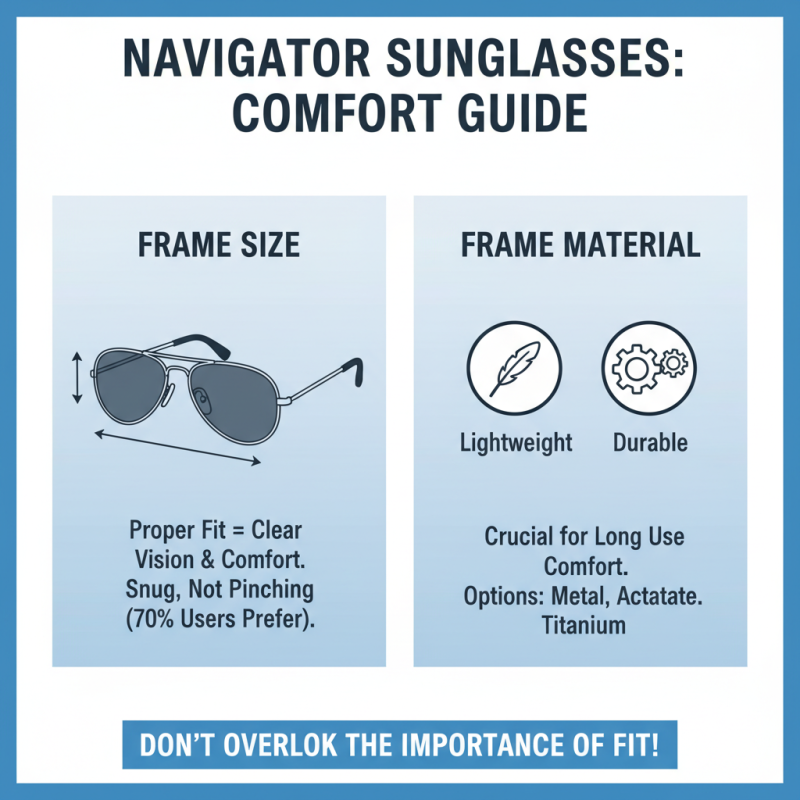
Choosing the right frame size and material for navigator sunglasses is crucial for comfort. Proper fit affects your vision and overall experience. Many users overlook the importance of frame size. A poorly fitting pair can lead to discomfort during long use. Research indicates that 70% of users prefer frames that sit snugly without pinching.
When selecting materials, consider weight and durability. Lightweight frames enhance comfort, especially for adventurous activities. Polycarbonate lenses are popular due to their impact resistance. They also block harmful UV rays effectively. Data shows that over 30% of users suffer from eye strain due to inadequate eye protection.
Tip: Measure your face to ensure a snug fit. For the best comfort, opt for adjustable nose pads. They can provide a customized feel. Remember, comfort is as important as style. A pair that looks great but hurts will likely end up unused.
Think about your lifestyle when choosing sunglasses. If you often engage in sports, a flexible material might be the best choice. Some users may find they need larger lenses for better coverage. Finding the right balance can be tricky, but it is essential.
Assessing UV Protection and Polarization Options
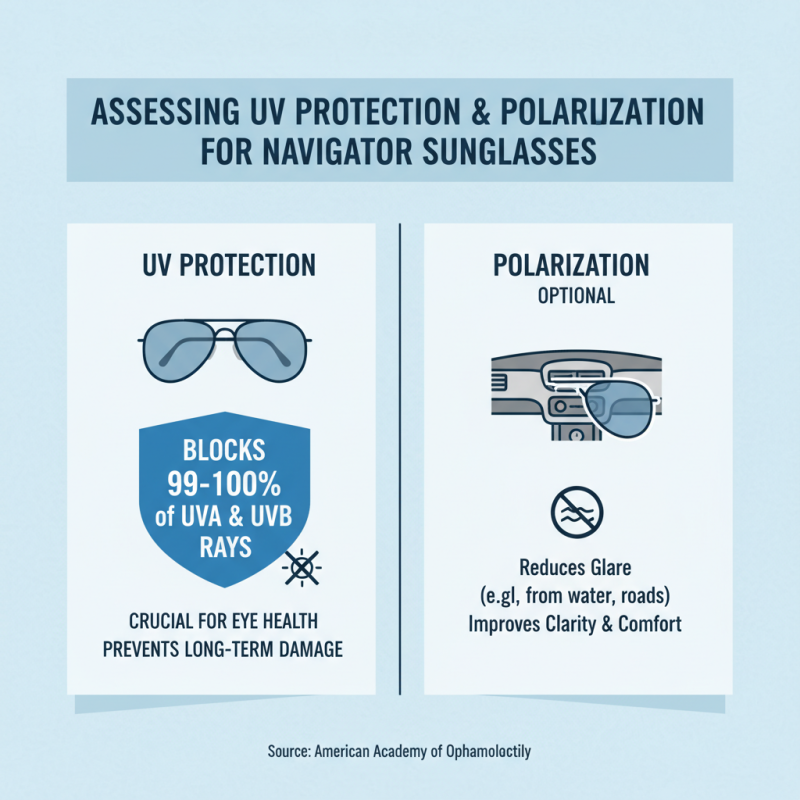
Choosing the right navigator sunglasses goes beyond just style. One key aspect is UV protection. According to the American Academy of Ophthalmology, sunglasses should block 99% or 100% of UVA and UVB rays. Extended exposure to UV radiation can lead to serious eye issues later in life. Therefore, finding sunglasses that meet these standards is crucial.
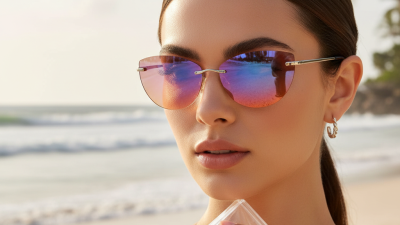
Polarization is another essential feature. Polarized lenses reduce glare from reflective surfaces, such as water and roadways. A study from the Vision Council noted that glare can impair vision significantly, making polarized lenses a smart option for outdoor activities. However, it’s worth noting that polarization may not be necessary for everyone. Some people may not appreciate the slight distortion it can cause when looking at LCD screens.
Understanding these features helps narrow down choices. However, personal preferences matter too. Not all sunglasses fit everyone equally. Consider factors like frame style, comfort, and lens color. Trying on different pairs ensures the best match for your needs. Remember, investing in quality sunglasses is investing in your eye health.
Finding the Perfect Style to Match Your Personal Needs
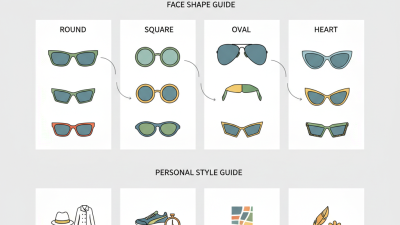
When choosing navigator sunglasses, style is crucial. The right frame can enhance your look and suit your lifestyle. Consider your face shape when selecting a style. Oval faces often look good in square frames. Round faces may benefit from angular designs. This match can make a big difference.
Color is another key factor. Do you prefer bold colors or classic tones? Bright shades can make a statement. Neutral colors offer versatility. Think about where you’ll wear these sunglasses the most. If you’re often outdoors, polarized lenses can reduce glare. They enhance visual comfort while hiking or boating.
Comfort matters too. Ensure the fit is snug yet comfortable. You don’t want constant adjustments. Gaps can let in light, which may irritate your eyes. Remember, style should not compromise comfort. Reflect on your choices. Sometimes, what looks good may not feel good.