
China’s rimless reading glasses market offers many manufacturers, but a polished catalog is only a starting point. Buyers should compare lens options, bridge and temple construction, finishing quality, and available customization. Ask how each supplier checks alignment and secures the lenses. Small details matter: uneven drill holes or loose fittings can affect comfort and durability.
Industrial designer Dieter Rams famously said, “Good design is as little design as possible.” That principle suits Rimless Reading Glasses, where discreet frames leave little room to hide poor workmanship. Yet minimal appearance should not mean minimal quality control. Request product samples, clear material specifications, and consistent answers about production capacity. Check whether the supplier can explain its inspection process in practical terms, not just promise “premium quality.”
A reliable shortlist takes more than a low quotation. Compare sample finish, communication, lead times, and the manufacturer’s ability to handle repeat orders. Ask about packaging and replacement components, too. Details count. No supplier comparison is perfect, and a sample cannot predict every production run. Treat it as evidence, not a guarantee. This guide examines manufacturers in China through those practical criteria, helping buyers ask sharper questions before choosing a partner.
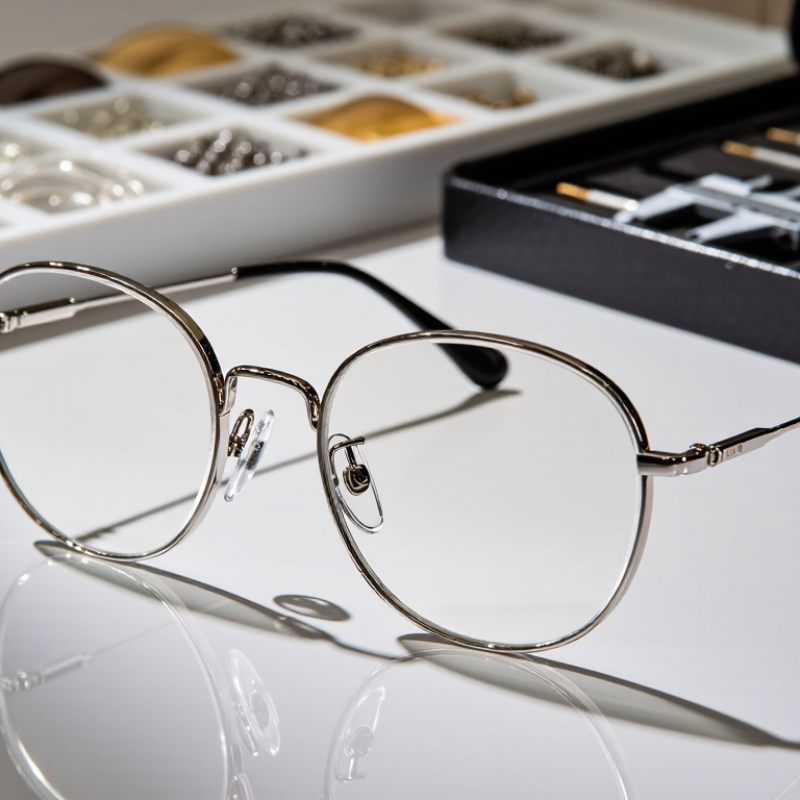
Rimless reading glasses have no full frame surrounding each lens. Instead, the lenses connect directly to a bridge and two temples through small fittings. This open design keeps the glasses visually light, but it depends on accurate assembly. The main components are prescription lenses, a nose bridge, nose pads, temple arms, hinges, and tiny screws or mounting posts. Small parts matter. A slight mismatch can make the lenses sit unevenly or feel unstable.
Lens material and thickness affect both comfort and durability. Technicians typically drill carefully placed holes in each lens, then secure the bridge and temples with suitable hardware. The edges also need smooth finishing, especially near the drilled areas. Nose pads should rest gently without pinching, while the temples should hold the glasses steady without excessive pressure. Details that look minor can change the fit. And “rimless” does not mean fragile by definition; construction quality, handling, and lens specifications all play a part. The design can seem simpler than it is, which is easy to overlook.
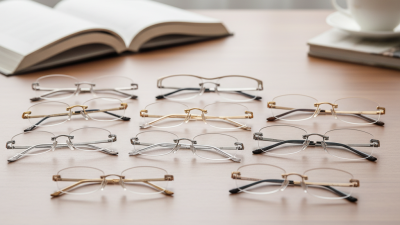
Rimless frames start with a balance problem: the lenses must support the temples and bridge without a surrounding rim. Designers choose lens shape, thickness, and attachment points together. Those points need enough material around each drilled hole to reduce cracking risk. A few millimeters matter. The frame should also sit level, with the bridge carrying weight comfortably rather than pulling at the nose.
In production, technicians trace or digitally map the lens shape, then cut and finish each lens before drilling mounting holes. Hole position and diameter must match the bridge and temple hardware. Edges are polished, and small screws or bushings secure the parts. Torque matters: overly tight fasteners can stress the lens, while loose ones may shift during wear. Workflows vary, so careful makers check the fit at each stage instead of relying only on a final glance.
Quality checks include lens alignment, hinge movement, screw security, and optical measurements. A technician may place the glasses on a level fixture and compare both lens heights. Even then, a pair can look precise on the bench but feel uneven on a real face. That is a useful reminder: measurements support good fitting, but they do not replace it.
| Design or Manufacturing Stage | What Happens | Typical Materials or Considerations | Quality Check |
|---|---|---|---|
| Product and fit specification | The frame layout is defined, including lens shape, bridge width, temple length, and the position of the lens attachment points. | Measurements are selected for the intended wearer and lens type. Rimless designs rely on the lenses and hardware rather than a surrounding frame. | Review the frame dimensions and confirm that the design provides a suitable fit and balanced weight distribution. |
| Lens selection and edging | Lenses are cut and edged to the required outline before the attachment holes are drilled. | Common lens materials include prescription-grade plastic and polycarbonate. Lens choice and thickness depend on the prescription, lens size, and material. | Check lens power, outline dimensions, edge finish, and any material-specific handling requirements. |
| Hole positioning and drilling | Small holes are drilled at specified positions so the bridge and temples can connect directly to the lenses. | Hole diameter, spacing, and distance from the lens edge must suit the chosen mounting hardware and lens design. | Inspect hole placement and edges for alignment, chipping, or cracks before assembly. |
| Bridge and temple fabrication | The bridge and temples are formed and finished to connect the two lenses and support the glasses on the wearer. | Metal components may use materials such as stainless steel or titanium; material choice affects weight, flexibility, and corrosion resistance. | Check component finish, symmetry, hinge movement, and compatibility with the lens mounting points. |
| Hardware and assembly | Screws, sleeves, bushings, or other mounting hardware are used to secure the bridge and temples through the drilled lens holes. | Hardware must match the hole dimensions and be tightened securely without applying excessive pressure to the lenses. | Confirm that connections are secure, components are aligned, and the lenses show no visible damage around the holes. |
| Adjustment and finishing | The assembled glasses are adjusted for alignment and comfort, then cleaned and prepared for packing. | Temple alignment, nose contact, and the angle of the frame are adjusted to suit the frame design and wearer. | Check that the glasses sit evenly, open and close smoothly, and have no sharp edges or loose fittings. |
| Product inspection and testing | Finished frames can be inspected for dimensions, workmanship, and the performance of their moving or fastening parts. | Applicable test methods depend on the product specification and destination market. ISO 12870 covers requirements and test methods for spectacle frames. | Document inspection results and verify that the finished product meets the agreed specification and applicable requirements. |
When evaluating Chinese manufacturers of rimless reading glasses, look beyond catalog photos. Rimless frames depend on precise drilling, clean lens edges, and balanced screw tension. Ask how each production batch is checked, and request sample pairs in more than one reading strength. Small flaws matter: a loose temple can make glasses sit unevenly after repeated opening.
Review specifications for lenses, hinges, nose pads, and coatings, then compare them with the sample you receive. Ask for written tolerances, inspection records, and details about replacement parts. A dependable supplier should explain how it handles scratched lenses, missing screws, and inconsistent fit. Clear answers matter. Vague promises do not.
Assess production capacity and lead times against your order size, but do not assume a larger factory is always better. Check whether packaging protects lens edges during shipping, and confirm sample quality against bulk production. Video calls help, though they cannot replace an independent inspection. No checklist is perfect. Paperwork can create false confidence; a report may miss frames that pinch after an hour. Have several users wear samples, note pressure near the nose and temples, and record needed adjustments before approving specifications.
Suggested buyer-scoring weights for comparing suppliers. These are evaluation recommendations, not survey results or measured market data.
Prioritize optical accuracy and product compliance, then verify rimless assembly strength, quality-control records, customization capability, delivery performance, and after-sales support. Request test reports and samples to validate each supplier’s claims.
Rimless reading glasses place unusual stress on small connection points. Without a surrounding frame, rough lens holes and uneven alignment are easy to notice. Inspect polished edges, consistent screw tension, and temples that open without wobbling. Ask for a sample and check it under bright light. Small details matter. A clean finish is useful, but consistent assembly across multiple units matters more.
Customization should be evaluated as a production process, not just a list of options. Confirm available lens shapes, bridge widths, temple lengths, nose-pad styles, and color finishes. Ask how changes affect tooling costs, minimum order quantities, and delivery times. Request a marked drawing or approved sample before production begins. Lens materials and coatings may limit certain shapes, so confirm compatibility in writing. Custom packaging can also slow packing if specifications arrive late.
Production capacity means dependable output, not simply the largest monthly figure in a catalog. Ask how many units can be assembled while maintaining inspection standards, and whether capacity is shared with other products. A pilot order can reveal actual lead times, packaging accuracy, and defect handling. Review quality records when available, then compare them with sample results. I would treat optimistic promises cautiously. A smaller facility with clear process controls may be a better fit, though it is not always the cheapest choice.
Before ordering, verify the factory behind the quotation. Request its business license, production address, and current quality certificates, then confirm the issuing organization and certificate scope. ISO’s 2022 Survey recorded more than 1.26 million valid ISO 9001 certificates across 189 countries. That shows the standard’s reach, not that every certified factory makes dependable glasses. Paper is not proof.
Ask for records tied to the exact rimless model: lens-drilling specifications, screw-retention checks, frame measurements, and batch inspection results. ISO 12870 covers requirements and test methods for spectacle frames; ask whether the maker’s testing applies to your design and materials. Request a pre-production sample, then inspect the drilled holes, screw seating, lens edges, and alignment under good light. Small gaps matter.
Check the supplier’s traceability, too. Can it link a finished pair to its material lot and inspection record? Ask who handles rework, replacement parts, and defects, and get the answers in writing. A video call can show the assembly line, but it cannot replace independent test records. I would also compare the sample with the approved drawing; I once overlooked a tiny bridge-width difference, and it complicated fitting later. Take your time.