Best Bifocal Glasses for Clear Vision and Comfort?
Bifocal glasses have become a popular choice for those needing vision correction. These glasses allow users to see clearly at multiple distances. They serve both for reading and distant viewing, making life easier for many.
Choosing the right bifocal glasses can be a challenge. Different styles and lens types can affect comfort and clarity. Not everyone finds success with a single pair of bifocal glasses. Some may struggle with the adjustment period, while others may experience discomfort.
It's crucial to consider your daily activities when selecting bifocal glasses. Individuals who engage in various tasks need to prioritize comfort and clarity. The perfect pair can significantly enhance your vision experience, yet it may require some trial and error. Understanding your unique needs is essential for finding the ideal option.
Understanding Bifocal Glasses: Definition and Types
Bifocal glasses are designed for those needing vision correction at different distances. They typically feature two distinct optical zones. The upper part is for distant vision, while the lower section caters to reading or close-up tasks. This dual functionality makes them popular among older adults and those with presbyopia.
There are several types of bifocal glasses. The most common are traditional bifocals, which have a noticeable line separating the two prescriptions. Some people find this line distracting. Progressive bifocals offer a gradual transition between prescriptions. However, not everyone appreciates the adjustment period required for these lenses. Each type has its pros and cons, making individual preferences important.
Choosing the right bifocal glasses can be tricky. Some may find the dividing line uncomfortable or distracting. Others might struggle with the learning curve for progressive lenses. Comfort is essential, but so is clear vision in both zones. Make sure to consider your lifestyle and vision needs when selecting bifocals. Experimenting with different styles might be necessary to find the perfect fit.
Best Bifocal Glasses for Clear Vision and Comfort
This chart represents the comfort levels and clarity ratings of different types of bifocal glasses based on user feedback. The clarity rating is measured on a scale from 1 to 10, and comfort is rated in a similar way.
Key Features to Look for in Bifocal Glasses
When choosing bifocal glasses, prioritize comfort and clear vision. A recent industry report indicates that more than 30% of wearers experience discomfort in standard bifocals due to improper fit. Look for adjustable nose pads and flexible frames. These features can enhance the overall fit and comfort level.
Lens material is also crucial. High-index lenses are lighter and thinner than traditional options. They can reduce the strain on your nose and provide a more comfortable experience. The American Optometric Association emphasizes the importance of lens quality. Quality lenses can reduce distortion and improve sight clarity.
Tip: Ensure the bifocal line placement suits your vision needs. Misalignment can cause discomfort and lead to eyestrain. Consider a trial fitting before concluding your purchase. Remember, each face shape is unique. It might be worth spending extra time to find the perfect frame style. The right pair can make a significant difference in your daily activities.
Choosing the Right Bifocal Prescription for Your Eyes
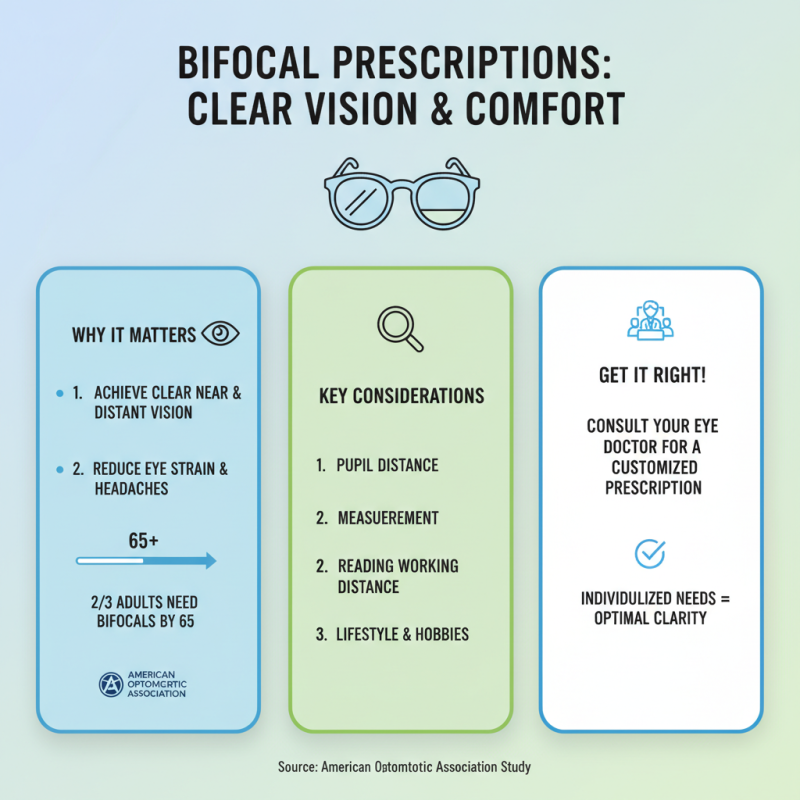
Choosing the right bifocal prescription for your eyes is crucial for achieving clear vision and comfort. A study from the American Optometric Association indicates that more than two-thirds of adults require bifocal lenses by age 65. This statistic highlights the importance of accurate prescriptions tailored to individual needs.
When selecting the right bifocal lenses, consider your lifestyle and visual habits. Are you reading frequently? Do you use digital devices for extended periods? These factors can influence the type of bifocal lens design suited for you. Not all bifocals are created equal, with some focusing more on distance vision and others on reading. Recent data suggests that multifocal lenses can improve visual comfort for up to 40% of users, compared to traditional bifocals.
It’s essential to have a thorough eye exam to ensure your prescription is precise. Many people overlook this step, leading to discomfort or inadequate vision correction. Regular check-ups are necessary, as your prescription may shift over time. The goal is to find a solution that enhances daily activities while minimizing strain on your eyes. Remember, the right choice can significantly impact your overall quality of life.
Top Brands and Models of Bifocal Glasses for Comfort
Finding the right bifocal glasses can greatly enhance your vision. Many people struggle with this choice. Comfort is key for daily wear. When selecting bifocals, consider the frame material. Lightweight options are easier to wear for long hours. Look for styles that suit your face shape. This can make a significant difference in comfort.
Lens quality is another crucial factor. High-definition lenses provide clearer vision. They reduce distortions that can be distracting. You might find some models are heavier, which can lead to discomfort. Frame size matters too. Too tight or too loose can create headaches. Experiment with different models to find the best fit.
Customer reviews often highlight experiences that can be helpful. Some users mention how certain frames slip down the nose. Others appreciate styles that stay in place. Trial and error can be necessary when selecting bifocals. Take your time to find the perfect pair. Consider adjustments as well, as comfort can be a journey.
Care and Maintenance Tips for Bifocal Glasses
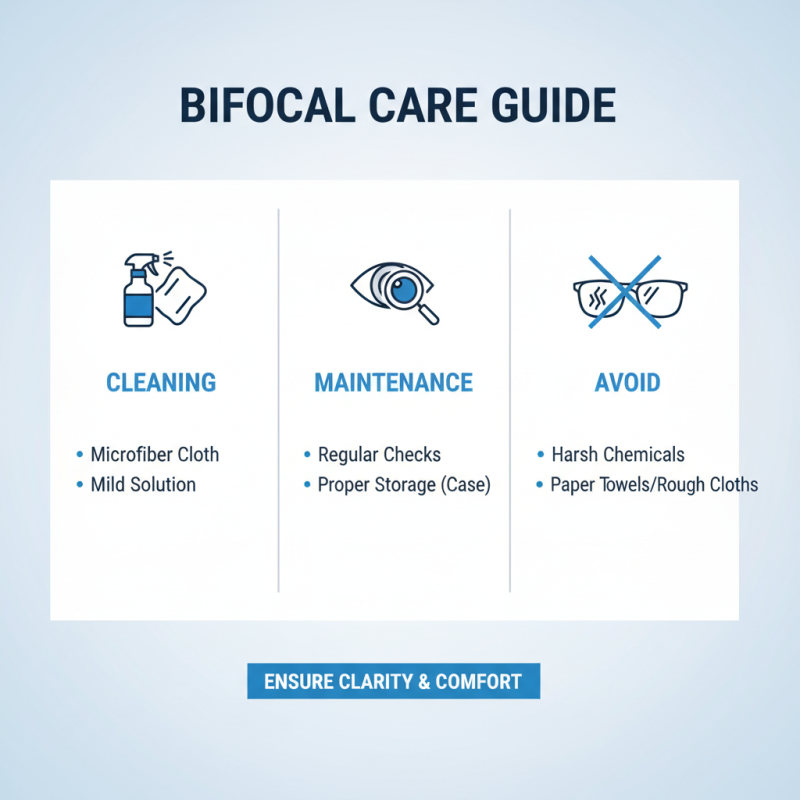
Bifocal glasses offer a convenient solution for those dealing with presbyopia. However, proper care and maintenance are essential to ensure longevity and comfort. Regular cleaning is a must. Use a microfiber cloth and a mild solution to avoid scratches on the lenses. According to industry reports, improper cleaning can decrease vision clarity over time.
Temperature changes can impact the frame. Avoid exposing your glasses to extreme heat. Leaving them in a hot car or near a heater can warp the frames. It is noted that 25% of frame damages arise from neglecting temperature precautions. Storing your glasses in a protective case is a simple yet effective way to prevent unnecessary wear.
You might find that regular adjustments become necessary. Frames can loosen over time, leading to an improper fit. An ill-fitting pair can cause discomfort, leading to headaches. An estimated 30% of users experience discomfort from poorly adjusted glasses. It is worthwhile to visit an eye care professional for periodic checks. Small steps in care can greatly enhance the lifespan of your bifocals, ensuring clear vision and comfort throughout the day.