What Are the Benefits of Photochromic Glasses?
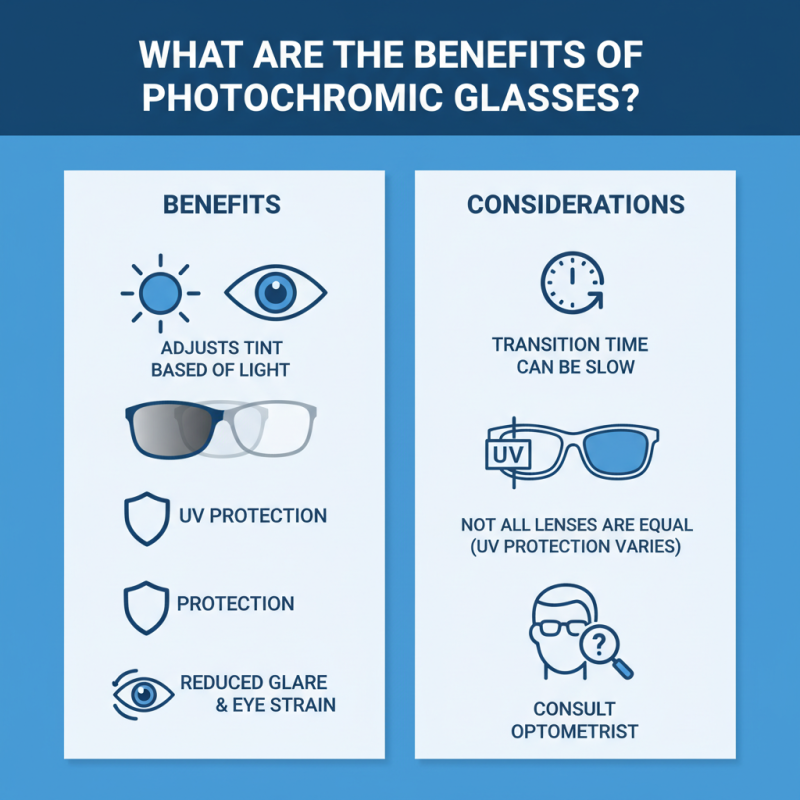
Photochromic glasses are a remarkable advancement in eyewear technology. They adjust tint based on light exposure, offering comfort and protection. Dr. Emily Carter, an optometry expert, emphasizes, "Photochromic glasses provide not only convenience but also vital UV protection."
These glasses darken in bright sunlight and clear up indoors, making them versatile. Users experience reduced glare and eye strain throughout the day. Yet, some people find their transition time too slow. This can be inconvenient when moving between different lighting environments.
Understanding Photochromic glasses is crucial for anyone considering them. They represent a blend of style and functionality. However, potential users should critically assess their needs and preferences. Not all photochromic lenses are created equal. Some may not provide adequate UV protection or might not adapt quickly enough. Engaging with an optometrist is advisable to make the best choice for individual circumstances.
Benefits of Photochromic Glasses in Eye Protection and Comfort
Photochromic glasses offer unique benefits in protecting your eyes. These lenses adjust to different lighting conditions. When exposed to sunlight, they darken, providing UV protection. This adaptive nature helps shield your eyes from harmful rays, reducing the risk of cataracts and other eye issues.
In addition, such glasses enhance comfort. Transitioning from indoors to outdoors can be jarring on your eyes. With photochromic lenses, you won't experience that harsh brightness. They create a smoother visual experience. However, they may not change instantly, leaving some users momentarily squinting. This slight delay can be frustrating, especially for those needing immediate relief.
Another aspect to consider is style. While they protect your eyes, some may find these glasses less fashionable. Preferences vary, and not everyone is a fan of changing lens colors. Despite this, many appreciate the combination of function and form. Emphasizing eye care and comfort is essential, though individuals should reflect on personal preferences before making a choice.
Benefits of Photochromic Glasses
Enhancing Visual Clarity: The Role of Photochromic Technology
Photochromic technology enhances visual clarity by adjusting lens darkness according to light exposure. These glasses react to UV rays, becoming darker outdoors. When indoors, they return to a lighter state. Research shows that over 80% of users notice significant comfort during bright conditions.
A study by the American Optometric Association reveals that photochromic lenses can block 100% of harmful UV rays. This offers protection against potential eye damage, promoting long-term eye health. Enhanced contrast in varying light conditions can reduce eye strain. Some users find that color perception shifts slightly, inviting them to adapt their visual habits.
Despite these benefits, some challenges exist. Transition times can vary based on temperature and lens material. For instance, lenses may darken slower in colder environments. This uneven performance may affect those relying on immediate visual comfort. Users must weigh the benefits against their specific lifestyle needs.
UV Protection Rates: How Photochromic Glasses Shield Against Harmful Rays
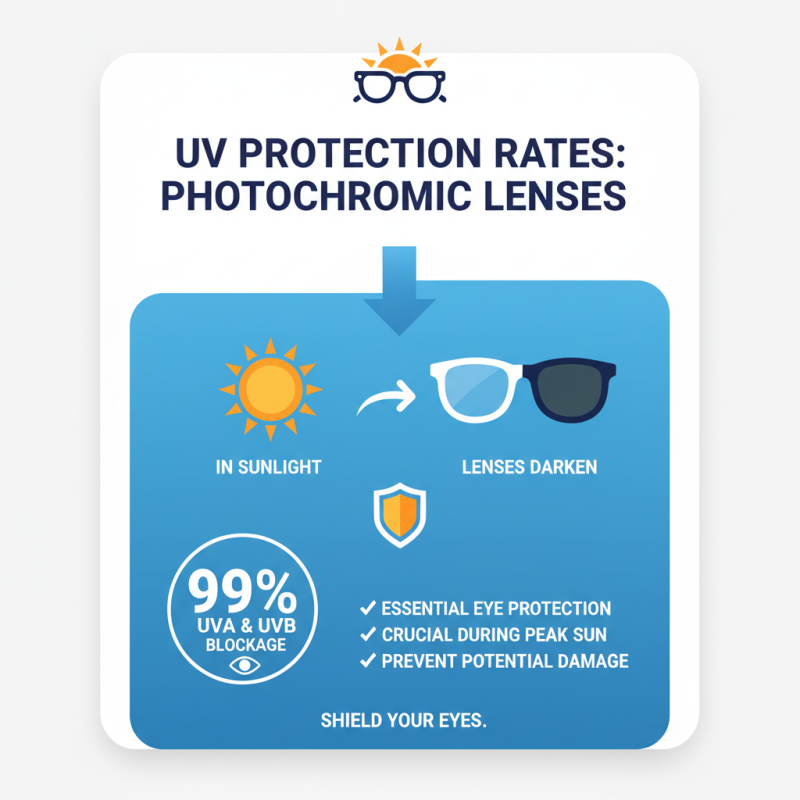
Photochromic glasses are not just a stylish accessory; they provide essential UV protection. These lenses darken in sunlight, helping to shield your eyes from harmful rays. They can block up to 99% of UVA and UVB radiation. This feature is crucial, especially during peak sunlight hours. Many people forget to prioritize eye care, exposing themselves to potential damage.
When you wear photochromic glasses, you're not just protecting your eyes; you're also enhancing comfort. The lenses adjust to different light conditions. This adaptability reduces glare and improves vision. For instance, driving on a sunny day can be challenging without the right eyewear. Yet, not everyone remembers to wear their glasses every time they’re outdoors. This oversight can lead to long-term eye issues.
Moreover, consider how these glasses simplify life. You won’t need to switch between prescription lenses and sunglasses. This convenience comes with a price, though. Some wearers might find the transition time slow under varying light conditions. It’s a reminder that while these lenses offer growth in convenience, they are not without their quirks. Awareness of these limitations can lead to better choices for your eye health.
Impact on Lifestyle: Convenience of Reducing Multiple Pair of Glasses
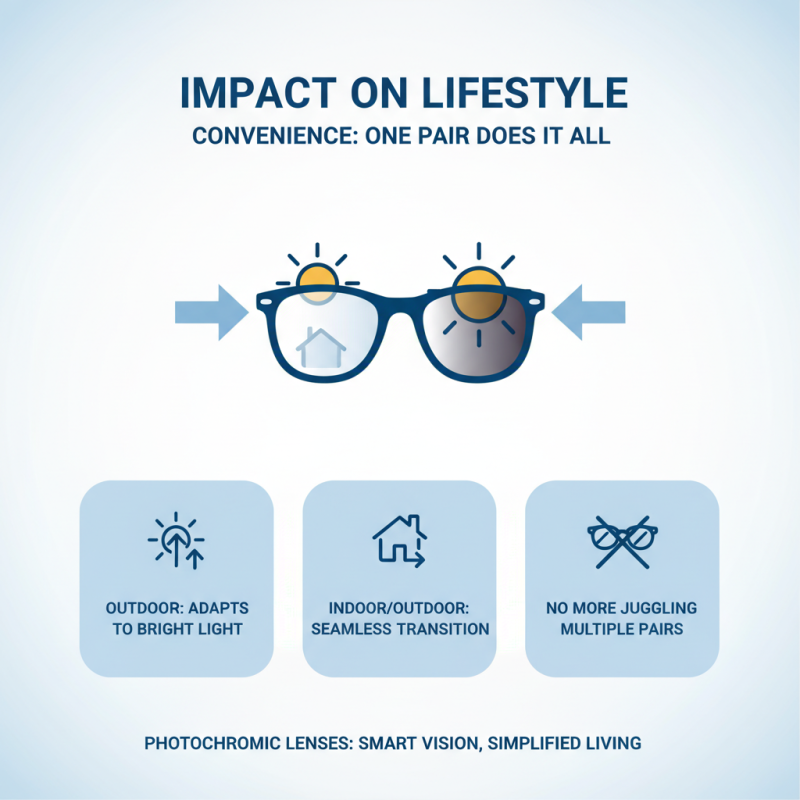
Photochromic glasses offer a unique solution for individuals who frequently switch between indoor and outdoor environments. These glasses adapt to varying light conditions, making them an ideal choice for those who want convenience. No more juggling multiple pairs of eyewear. Just one pair does it all.
However, there are challenges. Some users notice that photochromic lenses can take time to adjust. They might not darken as quickly in cars, which can be inconvenient. It is crucial to wear them consistently to get the full benefit. For those who spend a lot of time outdoors, the transition time can feel frustrating.
Despite these issues, many appreciate the simplicity. It's freeing to leave the house without worrying about carrying extra glasses. This lifestyle change reduces clutter, both physically and mentally. However, users should weigh these benefits against any minor inconveniences. Finding the right balance is key to enjoying the full advantages of photochromic eyewear.
Market Trends: Growth and Adoption of Photochromic Lenses in Eyewear Industry
The eyewear industry is witnessing a notable shift with the increased adoption of photochromic lenses. According to a report by Grand View Research, the global photochromic lenses market is expected to grow at a CAGR of 8.5% from 2021 to 2028. This trend reflects consumers' rising demand for versatile eyewear options that adapt to changing light conditions. The convenience of having one pair of glasses for both indoor and outdoor environments is enticing more users.
Several factors are driving this growth. Consumers prioritize comfort and eye protection. Photochromic lenses filter harmful UV rays, a feature becoming essential among health-conscious buyers. Research from Vision Council indicates that over 75% of Americans are aware of UV protection. This awareness translates to a growing preference for lenses that offer this capability. However, there are challenges. Not all photochromic lenses react equally in different temperatures. Users sometimes find the transition speed unsatisfactory, leading to frustration.
The market is diverse, with options ranging from prescription lenses to fashion eyewear. While adoption rates are rising, there remains a need for education. Some consumers are still unaware of the technology behind photochromic lenses. Industry experts emphasize that overcoming this knowledge gap can further enhance market growth. As demand grows, manufacturers are investing in research and development. This trend hints at a promising future for photochromic glasses, despite existing hurdles.
What Are the Benefits of Photochromic Glasses? - Market Trends: Growth and Adoption of Photochromic Lenses in Eyewear Industry
| Benefit |
Description |
Market Growth (%) |
Adoption Rate (%) |
| UV Protection |
Blocks harmful UV rays to protect eyes. |
7.5 |
65 |
| Convenience |
Eliminates the need for multiple pairs of glasses. |
10.2 |
72 |
| Visual Comfort |
Reduces glare and improves visibility changes. |
6.8 |
60 |
| Style Options |
Available in various frame designs to enhance personal style. |
8.1 |
70 |
| Increased Durability |
Made with durable materials that resist scratches and impacts. |
9.0 |
68 |