Choosing sunglasses is no longer only about matching a frame with your face. Outdoor glare, ultraviolet exposure, lens quality, and wearing comfort all influence eye protection. The World Health Organization estimates that at least 2.2 billion people live with some form of vision impairment. Although sunglasses cannot prevent every eye condition, suitable UV protection remains a practical daily habit.
The Vision Council’s 2024 Consumer Insights Report identifies protection, comfort, and appearance as recurring factors in sunglasses purchases. Those priorities support a more careful approach to Mirror Sunglasses Polarized products. Polarization can reduce reflected glare from roads, water, snow, and glass. However, polarization alone does not guarantee full UVA and UVB protection. Look for clear UV400 labeling, reliable product information, and lenses tested by recognized standards.
Seven practical tips will guide this choice. They examine UV protection, polarization performance, mirror-coating quality, lens color, frame fit, activity needs, and seller credibility. A gray lens may preserve natural color, while brown or amber lenses can improve contrast in changing light. Darker does not always mean safer. That assumption deserves attention.
Fit matters in real situations. A loose frame may slide during cycling, while wide coverage can limit light entering around the edges. Scratches, distorted reflections, or uneven coatings suggest poor manufacturing. The American Academy of Ophthalmology also advises choosing sunglasses that block 99% to 100% of UVA and UVB rays.
Small details matter. No single lens suits every person or activity. Personal prescription needs, climate, and usage patterns should shape the final decision. Even this guidance has limits, because product claims and testing quality can vary between markets. Reliable evidence is worth more than a mirror-like finish.
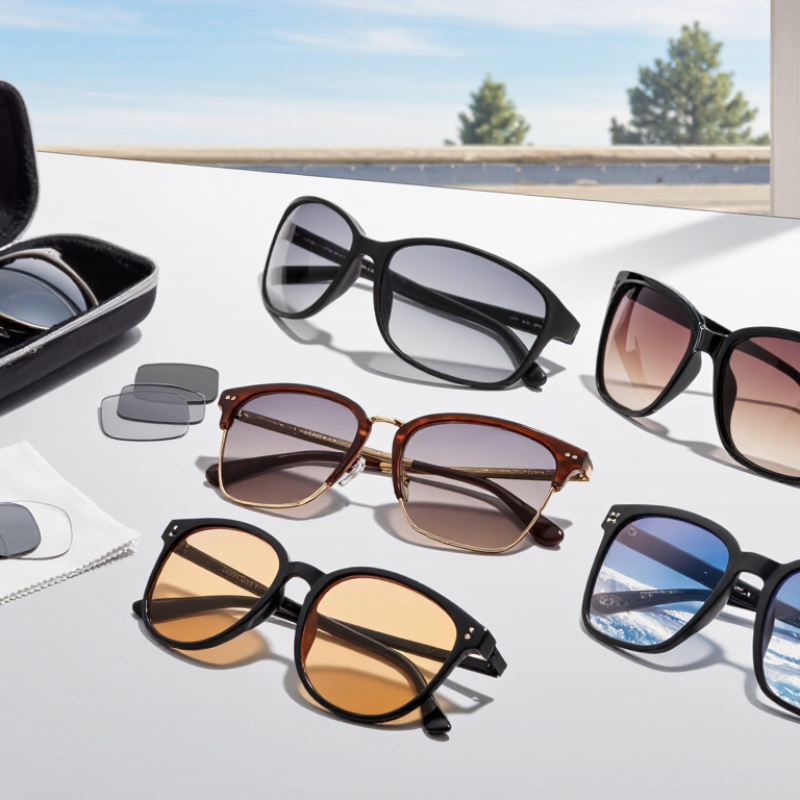
Polarized mirror sunglasses should reduce reflected glare, not simply look darker. Test them near water, glass, or a bright road. Rotate one lens against another polarized lens. A strong filter should noticeably reduce light at one angle. You can also view an LCD screen. Some screens may become dim or black, but this test is not universal. Do not rely on it alone.
Check whether the lenses show clear details without warping straight lines. Look across a shop window or road sign. Uneven color patches may indicate inconsistent filtering. Good lenses should preserve natural colors and comfortable contrast. Polarization does not automatically mean full UV protection. Confirm the product provides protection against UVA and UVB radiation. Mirror coating can reduce visible brightness, but it cannot correct poor optical quality.
Fit matters during real use. The frame should sit firmly without pressing your temples or leaving wide gaps. Try looking down and sideways. Glare may return if the lenses are too small. An optician can check lens alignment and prescription accuracy when needed.
I once focused too much on appearance and missed slight edge distortion. That mistake changed my buying habit.
A darker lens is not always better. Choose visual comfort, reliable protection, and stable clarity for your usual outdoor conditions.
7 Tips to Choose Polarized Mirror Sunglasses
Choose the Right Mirror Color for Your Environment
Mirror color is not only a style choice. It changes how much visible light reaches your eyes. Always check for full UVA and UVB protection first. Polarization can reduce reflected glare, but it does not replace proper ultraviolet protection.
Silver or gray mirrors suit strong sunlight on beaches, roads, and open fields. They preserve natural colors and work well during long outdoor activities. Gold and brown mirrors can improve contrast on hiking trails, especially under mixed light and green surroundings. Copper or rose lenses may help during cloudy weather, dawn, or late afternoon. They create a warmer view, though some colors may look less accurate.
Blue mirrors are often useful near water because they handle bright reflections comfortably. However, they can feel too intense on already bright snow. For snowy conditions, choose a dark gray, silver, or green mirror with a secure frame and close coverage. Check the lens from several angles. A shiny surface does not always mean stronger glare control.
Fit matters more than appearance. The frame should sit steadily without pressing your temples. Leave minimal gaps around the cheeks. I once focused too much on the mirror finish and ignored side glare; that was a poor choice. Weather changes quickly, so one color cannot suit every trip. Consider the surface, cloud cover, activity, and how your eyes react after ten minutes outdoors.
| Tip | Environment or Activity | Suitable Mirror Color | Recommended Base Tint | Why It Can Work | What to Check Before Buying |
|---|---|---|---|---|---|
| 1 | Open water, boating, fishing, and beaches | Blue or silver mirror | Gray | A dark gray base tint helps preserve fairly natural color perception and reduce brightness. Polarization is especially useful for cutting reflected glare from relatively flat surfaces such as water. | Confirm that the lenses are polarized and provide full ultraviolet protection, including UVA and UVB. |
| 2 | High-altitude hiking, snow, and glacier travel | Silver or flash mirror | Gray or gray-green | Highly reflective snow and ice can create intense glare. A darker lens category can reduce visible brightness, while polarization may improve comfort on suitable non-safety-critical surfaces. | For mountaineering or glacier travel, look for side coverage and a lens category appropriate for very bright conditions. Do not use ordinary sunglasses for direct solar viewing. |
| 3 | Driving in bright daytime conditions | Green, gray, or subtle silver mirror | Gray or gray-green | Neutral or mildly green-gray lenses can reduce glare while maintaining relatively natural colors. Polarization can help with reflections from roads, vehicles, and wet pavement. | Avoid lenses so dark that dashboard displays or traffic signals become difficult to read. Never use heavily tinted sunglasses at night. |
| 4 | Cycling, running, and changing outdoor light | Red, rose, or copper mirror | Rose, copper, or brown | Warm base tints can increase perceived contrast and make terrain details easier to distinguish in variable daylight. They may be useful for trails, roads, and partly cloudy conditions. | Choose a secure, impact-resistant frame and lenses designed for active use. Mirror color alone does not determine optical clarity or protection. |
| 5 | Golf, tennis, and other field sports | Copper, rose, or amber mirror | Brown, copper, or rose | Warm tints can enhance contrast between a ball and backgrounds such as grass, trees, or sky. They may also make changes in surface texture easier to notice. | Make sure the tint does not distort the colors you need to judge. Select a lens with adequate visible-light transmission for the actual brightness of the course or court. |
| 6 | Overcast, hazy, or partly cloudy days | Rose, amber, or light gold mirror | Rose, amber, or light brown | Lighter warm tints can improve perceived contrast when the scene has reduced contrast, while avoiding the overly dark appearance that may be uncomfortable in weaker daylight. | Choose a lighter lens than you would for intense sun. Check the stated visible-light transmission rather than judging darkness from the mirror finish. |
| 7 | Everyday outdoor use and mixed conditions | Gray, green, or light silver mirror | Gray or green-gray | Neutral tints are versatile for walking, commuting, and general daytime use because they normally change color perception less than strongly warm or cool tints. | Prioritize a comfortable fit, optical quality, UV400 or equivalent full UV protection, and a lens darkness suitable for the brightest place where you will use them. |
Important: The visible mirror color is mainly produced by the reflective coating and does not by itself determine glare reduction, UV protection, or lens darkness. Polarization, base tint, visible-light transmission, optical quality, and the intended environment should all be considered together.
Match Frame Fit, Coverage, and Face Shape
Tip 1: Check the fit before admiring the mirror finish. The frame should sit securely without pressing your temples. Tip 2: Choose lenses that block 99–100% of UVA and UVB. The American Academy of Ophthalmology recommends this protection. Mirror coating alone does not prove UV safety. Tip 3: Measure coverage. Lenses should reach close to your eyebrows and cheeks. This reduces bright side glare during driving, hiking, or beach walks.
Tip 4: Match the frame to your face shape, but do not treat rules as strict. Angular frames can balance round faces. Softer, rounded frames may complement square jaws. Oval faces usually suit many silhouettes.
Tip 5: Test the bridge carefully. A slipping bridge leaves red marks and changes your visual alignment. My own mistake was choosing a dramatic frame that looked excellent but slid whenever I moved. Comfort matters more than photographs.
Tip 6: Consider lens contrast and daily surroundings. Gray lenses preserve natural color, while brown or amber lenses can increase perceived contrast. Polarization helps reduce reflected glare from water, glass, and pavement.
Tip 7: Inspect the hinge and lens edges. The Vision Council’s 2023 Consumer in Sight report found that about 80% of U.S. adults own sunglasses, making fit a practical quality issue, not a niche concern. The World Health Organization reports that at least 2.2 billion people have near or distance vision impairment. That figure is broad, but it reinforces the value of clear, protective eyewear. Mistakes still happen. Fit should be tested in real light.
7 Tips to Choose Polarized Mirror Sunglasses
Polarization reduces reflected glare from roads, water, and bright windows. It does not automatically provide ultraviolet protection. Check for clear wording such as 100% UVA and UVB protection or UV400. A dark lens alone proves nothing. Ask an optician to verify uncertain claims with a UV meter. That small check can prevent an expensive mistake.
Examine the lenses under bright, even light. Look for bubbles, uneven mirror coating, scratches, or color patches. Hold the sunglasses at arm’s length and view a straight doorframe through each lens. Wavy lines may indicate distortion. Rotate the glasses near an LCD screen. The display should noticeably darken, confirming polarization. This test is useful, but it is not a substitute for professional inspection. Lens clarity matters more than a fashionable reflective finish.
Daily durability needs practical testing. Open and close each hinge gently, and check for looseness or clicking. The frame should sit evenly without pressing behind your ears. Flexible hinges may handle frequent removal better, while very thin frames can feel fragile. I once chose attractive sunglasses with weak nose pads; they became uncomfortable after an hour. That experience changed my priorities. Look for secure screws, smooth edges, and scratch-resistant lenses. Wipe away salt, sweat, and sand before storing them in a hard case. Even quality sunglasses need careful handling.
Verify UV protection, lens quality, and daily durability before choosing polarized mirror sunglasses. Polarization reduces reflected glare, but it does not automatically prove UV protection.
Chart note: The chart shows the visible light transmission ranges commonly assigned to sunglass filter categories under ISO 12312-1. UV protection must be verified separately because visible darkness does not prove UV blocking.