2026 Top Rectangle Reading Sunglasses for Buyers
The best Rectangle Reading Sunglasses should make small print clearer without making a sunny walk less comfortable. That sounds simple. Yet frame width, bridge fit, lens strength, and tint all shape the experience. A frame that looks sharp online may press behind the ears after ten minutes. Buyers should check measurements, return terms, and lens details—not just the product photo.
The World Health Organization’s World Report on Vision (2019) estimated that at least 2.2 billion people have near or distance vision impairment; at least 1 billion cases were preventable or unaddressed. This is not a sunglasses market forecast, but it shows why clear, practical vision information matters. WHO Director-General Dr. Tedros Adhanom Ghebreyesus wrote, “Eye health is critical to achieving the Sustainable Development Goals.” For buyers, the takeaway is modest: magnification and sun protection are separate features, so verify both rather than assuming a dark lens blocks ultraviolet radiation.
This 2026 guide compares rectangle styles through useful buying details: fit, reading power options, lens tint, build quality, and everyday handling. Look for clear product specifications and credible UV-protection claims. If you are unsure which reading strength suits you, an eye-care professional can help. Style still counts. Comfort counts more. A slight drawback may be worth mentioning, too, because no frame fits every face. The aim is not to promise perfect vision, but to help buyers choose Rectangle Reading Sunglasses with fewer surprises.
Rectangle Frame and Reading Power: How Diopters (D) Define Magnification
In rectangle reading sunglasses, a marking such as +1.50 D describes lens power in diopters. It is not a magnification percentage. Positive lenses bend light to help nearby text come into focus. A +2.00 D lens has a shorter focal length than a +1.00 D lens, so it generally suits a closer reading distance.
Not quite “stronger zoom.”
The number alone does not tell you which pair will feel comfortable. Hold a menu or phone at your usual reading distance and test small print in steady light. If letters look distorted, or you need to push the page unusually far away, that power may not suit you. Rectangle frames change the viewing area and fit, not the diopter strength. A larger lens does not mean more magnification.
Tint affects brightness, not reading power. That detail is easy to overlook outdoors, where glare can make print harder to see. Many ready-made readers use the same power in both lenses, so they may not suit people whose eyes need different corrections. Persistent blur, headaches, or a noticeable difference between eyes deserves a proper eye exam. A quick shop test can be useful, but it is not a full assessment.
UV Protection: UV400 Covers Ultraviolet Wavelengths Up to 400 nm
2026 Top Rectangle Reading Sunglasses for Buyers
UV400 is a useful specification to check when comparing rectangle reading sunglasses. It indicates protection against ultraviolet wavelengths up to 400 nanometers, covering UVA and UVB radiation. That matters outdoors. A dark lens can look reassuring, but tint alone does not confirm UV protection. Check the product label and, where available, supporting test information.
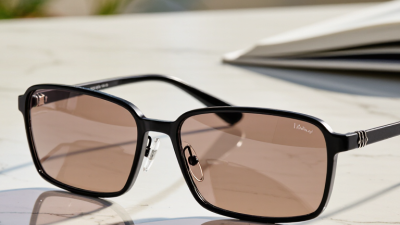
Reading lenses help with close tasks, such as checking a phone or a café menu. Sunglasses also need a comfortable fit: the frame should sit securely without pressing hard at the temples. Rectangle frames often have defined corners, so compare their width with your face and make sure the lenses provide suitable coverage around the eyes. Fit is easy to overlook.
UV protection and reading strength are separate features. Confirm both before buying, and choose the magnification that suits your reading distance. If a product gives no clear UV400 information, I would hesitate rather than infer protection from its appearance. Even then, fit and lens clarity deserve attention; a well-marked label cannot make an uncomfortable pair practical.
Sun-Filter Ratings: ISO 12312-1 Classifies Sunglasses in 5 Categories
2026 Top Rectangle Reading Sunglasses for Buyers
For buyers comparing rectangle reading sunglasses, ISO 12312-1 describes five sunglass filter categories by visible-light transmission. Category 0 transmits about 80–100% of visible light; Category 1, 43–80%; Category 2, 18–43%; Category 3, 8–18%; and Category 4, 3–8%. The lower the transmission, the darker the lens. Not the same thing as UV protection. A dark lens does not, by itself, confirm adequate UV filtering, so check the product’s UV information separately.
Categories can help you match lenses to bright conditions, but they do not tell you whether reading power or frame fit is right. In practical use, check that small print stays clear through the reading area and that the rectangular frame does not slip when you look down. Category 4 lenses are very dark and generally unsuitable for driving. One easy mistake is choosing by appearance alone; I would reconsider that shortcut, especially for frequent outdoor use.
Tips: Check the stated filter category and UV protection. Try reading a short label in the intended light. Make sure the frame sits securely.
2026 Top Rectangle Reading Sunglasses for Buyers — Sun-Filter Ratings: ISO 12312-1 Classifies Sunglasses in 5 Categories
A brand-neutral buying guide to rectangular reading-sunglass configurations and the five visible-light filter categories used in ISO 12312-1.
| Filter Category |
Visible Light Transmittance (VLT) |
Typical Conditions |
Rectangle Reading-Sunglass Configuration |
Buyer Checks |
Driving Note |
| Category 0 |
80%–100% |
Very low light reduction; mainly cosmetic or for overcast conditions. |
Light-tint rectangular lenses with reading correction for indoor-to-outdoor transitions or lightly overcast settings. |
Confirm the reading power is suitable for your near-vision needs. A light tint is not a substitute for verified UV protection. |
Do not assume suitability from the category alone; check the product’s road-use information and local requirements. |
| Category 1 |
43%–80% |
Limited sun glare, such as bright overcast conditions. |
Lightly tinted rectangular reading lenses for occasional outdoor reading in modest sunlight. |
Check lens coverage and UV-protection labeling, as well as fit and reading power. |
Confirm that the specific eyewear is marked or documented as suitable for daytime road use. |
| Category 2 |
18%–43% |
Moderate sunlight; a general-purpose sun-filter range. |
Medium-tint rectangular reading lenses for everyday outdoor reading in ordinary sunny conditions. |
Look for clear UV-protection information and a comfortable fit that does not obstruct peripheral vision. |
Check product road-use guidance and local rules before driving in any sunglasses. |
| Category 3 |
8%–18% |
Strong sunlight, such as bright beach or summer conditions. |
Dark rectangular reading lenses for outdoor reading in strong sunlight. |
Verify UV protection separately from the filter category. Consider whether the darker tint is practical for changing light. |
May be suitable for daytime road use only when the specific eyewear meets applicable requirements; never use at night or in poor visibility. |
| Category 4 |
3%–8% |
Very intense light, such as high-mountain or glacier environments. |
Very dark rectangular lenses intended for exceptional glare—not typical everyday reading use. |
Choose only for the conditions specified by the manufacturer. Check the lens and frame are appropriate for the intended activity. |
Not suitable for driving or road use. |
Important: ISO filter category describes visible-light transmittance; it does not, by itself, confirm UV protection or reading-lens strength. Check the eyewear’s UV-protection information and select reading correction appropriate to your needs. VLT ranges shown are the standard category ranges for sunglasses under ISO 12312-1.
Light Conditions: Category 3 Lenses Transmit 8–18% of Visible Light
Category 3 lenses transmit about 8–18% of visible light, making them suited to bright outdoor conditions. On a sunny pavement or beside a bright window, they can reduce glare and make the scene more comfortable to view. The rectangle shape is a frame choice; it does not determine how much light the lenses filter. Check that the frame fits securely and does not leave large gaps around the sides.
For reading outdoors, consider where the light will fall. Dark lenses may ease glare on a café table, but they can also make small print harder to see in shade. That trade-off matters. A larger phone font or a move to a brighter spot may help more than choosing the darkest-looking frame. Category 3 describes visible-light transmission, not the lens prescription or near-vision strength.
Check the product details for UV protection separately, since visible-light filtering alone does not confirm it. If you need magnification, compare the reading power with what you use comfortably indoors. I would not assume one pair works equally well for books, screens, and changing light. A quick test with your usual print can reveal an awkward fit or an overly dim view.
Driving Safety: Category 4 Lenses Transmit 3–8% and Are Not for Driving
For buyers comparing rectangle reading sunglasses, lens category matters more than how dark the frame looks. ISO 12312-1:2022 sets Category 4 visible-light transmittance at 3–8%. That is extremely dark, and the standard says these filters are not suitable for driving or road use. A shaded windshield, tunnel entrance, or tree-lined turn can make the view darker still. Don’t use Category 4 lenses behind the wheel. Not even for a short trip.
The label is easy to overlook. It shouldn’t be. ISO’s light-transmission category also does not, by itself, tell you the level of UV protection; check the product’s UV specification separately. The World Health Organization’s 2023 Global Status Report on Road Safety estimates 1.19 million road deaths each year worldwide. That figure is not evidence that sunglasses cause crashes, but it is a reminder that clear vision matters. For driving, choose eyewear explicitly marked suitable for road use, and ask an eye-care professional whether reading magnification is appropriate for distance vision. A quick fit check helps: look through the lenses at a road sign, then turn your head. If the frame blocks side vision, reconsider it. Darker can feel safer. It isn’t always.
2026 Top Rectangle Reading Sunglasses for Buyers — Driving Safety
Visible light transmission (VLT) ranges by sunglass filter category
Category 4 lenses transmit only 3–8% of visible light and are not suitable for driving. Category 3 lenses are also unsuitable for night or twilight driving. Ranges shown are filter-category VLT bands used in EN ISO 12312-1.